Education
10 Best Engineering Universities in the U.S.A
Published
5 years agoon
By
Editorial
Post Links
List of the 10 Best Engineering Universities in the U.S.
This list includes private universities, public universities, non-profit institutions, and all other types of higher education institutions in the U.S that offer an engineering degree program at either undergraduate or graduate levels.1) Harvard University, Cambridge United States
Harvard University is a private institution of higher education in Cambridge, Massachusetts. It was established in 1636 and has since grown to become among the most prestigious universities in the world. Its mission is to educate the highest caliber of students through research and scholarship, teaching, and public service. The university also offers an extensive variety of extracurricular activities including athletics, clubs& societies, performing arts, and student The university has a rich history and tradition and it is one of the most prestigious universities in the United States.2) University of Michigan
For more than two centuries, the University of Michigan has worked to serve the public and address our world’s most pressing challenges through research, education, and service. They have strived to provide a world-class education while completing their research projects. University of Michigan has always been committed to strict adherence to its core values, the most fundamental of these being exploration and experimentation. As a result, the University has unabashedly dared to change with each new era of understanding. At University of Michigan, everyone seeks improvement in all they do. There’s no single way to be excellent, so there is no limit to the improvements that students and faculty can make themselves.3) University of Illinois at Urbana-Champaign
The University of Illinois at Urbana-Champaign is a public doctoral research university located on a 300-acre campus in Urbana, Illinois, United States. Established in 1867 as the University of Illinois, it is the flagship campus of the University of Illinois system and has the largest enrolment among U.S. public universities (as measured by undergraduate population).4) Massachusetts Institute of Technology
Massachusetts Institute of Technology is a prestigious university that was founded in 1861. It is an institution of higher learning and research that operates within the United States. Massachusetts Institute of Technology is a school that has produced many successful individuals in the fields of science, technology, and business. The university is a world-renowned academic institution that is influential in multiple fields. Massachusetts Institute of Technology (MIT) is Ranked 19th by U.S. News and World Report5) University of California, Berkeley
UC was founded back in 1868 for one reason. To provide an even better educational institution. The University has since taken on a role that is both essential for California as well as revered by future generations. UC Berkeley is a public research university in California, which anchors the list of world’s top 25 universities. UC Berkeley has had a long and illustrious history, with many firsts and notable accomplishments. The university was founded as a public land-grant institution and the first one chartered by the State of California. In 1905, UC Berkeley became the site of what is now known as the University of California system. The University of California system is one of the largest public university systems in the U.S. It has ten campuses, with many existing campuses dating back to the 1700s. University of California, Los Angeles (UCLA) was Ranked 5th by U.S. News& World Report6) Georgia Institute of Technology
Georgia Institute of Technology is one of the leading public research institutions in the world. It was established in 1885 as the main engineering school for Georgia. Today, it offers a wide range of undergraduate and graduate degrees with over 5,100 faculty members and more than 34,000 students.7) Purdue University-Main Campus
Purdue University-Main Campus is the oldest and largest campus of Purdue University. It was founded in 1869 as Purdue University, but changed its name in 1997 to reflect the expansion of the university. Purdue-Main Campus is home to a wide variety of academic programs, including science, engineering, humanities, fine arts and social sciences. The campus also hosts many students focused events throughout the year such as farmer’s markets and food trucks.8) University of Texas at Austin (UTAustin)
University of Texas, Austin is a public research university in the state of Texas. The university has an endowment of about $9 billion, it has about 38,000 students and offers more than 300 degree programs. The University of Texas at Austin has been ranked 8th on the U.S. News & World Report list for 2019 in the category “national universities.” It also received a spot on Forbes’ list of Best Value Colleges for 2019.9) Carnegie Mellon University
Carnegie Mellon University is a private research university based in Pittsburgh, Pennsylvania. It was originally founded as the Carnegie Institute of Technology and the Mellon Institute of Industrial Research in 1900. Carnegie Mellon University was established by Andrew Carnegie as the Carnegie Technical Schools and became the Carnegie Institute of Technology in 1912 offering four-year degrees. Carnegay Institute of Tech merged with Mellon Institute of Industrial Research, formerly a part of the University of Pittsburgh, in 1967. Since then, the university has operated as a single entity. The university has 7 colleges and independent schools, including the College of Engineering, College of Fine Arts, Dietrich College of Humanities and Social Sciences, Mellon College of Science Tepper School of Business, Heinz College of Information Systems and Public Policy, and the School of Computer Science. The university has many campuses across the world so you can study in the place that best fits your needs. Their main campus is located 3 miles away from Downtown Pittsburgh and also have a couple dozen more worldwide locations.10) Arizona State University, Tempe Campus
Arizona State University, Tempe Campus is a public institution of higher education in Tempe, Arizona. It is part of the Arizona State University System and is home to more than 45,000 students. It has a number of undergraduate and graduate degrees such as Technology, architecture, business and journalism e.t.c. It is in the process of implementing a new program that combines undergraduate education with a Master’s degree from one school. The school is also attracting top talent from all over the world to its graduate programs. In Conclusion, this article has been able to outlined the 10 best Engineering Universities in the United State of America, previously we made a roundup of the 10 best Universities in the World, do check it out.Related Posts
Related
Discover more from Daily Media NG
Subscribe to get the latest posts sent to your email.
You may like
Career
From Oil Fields to Mind Fields: How Digital Skills Initiatives Can Power Nigeria’s Next Economy
Published
2 days agoon
September 14, 2026
From Oil Fields to Mind Fields: How Digital Skills Initiatives Can Power Nigeria’s Next Economy
For over six decades, Nigeria’s economic story has been written in crude oil. The Niger Delta’s wells filled national coffers, funded budgets, and shaped foreign policy. But oil was always a finite bet — vulnerable to price shocks, environmental fallout, and a global market slowly turning away from fossil fuels. Today, a quieter but far more durable resource is emerging as the country’s real growth engine: the Nigerian mind.
Related Posts
The shift from oil fields to “mind fields” isn’t just a clever phrase. It’s a structural transformation already visible in the numbers, and it’s being accelerated by a wave of digital skills initiatives — programs like MODE Digital Creations’ Digital Skills Initiative — that are quietly building the workforce Nigeria needs for its next chapter.
The Numbers Tell the Story
Nigeria’s Information and Communication sector grew 9.62% year-on-year in Q2 2026 — more than twice the pace of the overall economy — and now contributes 11.74% of the country’s real GDP, up from 11.18% a year earlier. That is not a rounding error; it’s one of the fastest-growing components of the entire economy, and it’s growing precisely as oil’s dominance becomes harder to sustain.
Nigeria’s digital economy revenue is projected to reach $18.3 billion by end of 2026, up from $9.97 billion in 2021 nearly doubling in five years. Nigeria already leads Africa in start-up investment and is home to five tech unicorns: Interswitch, Flutterwave, OPay, Andela, and Moniepoint. Meanwhile, internet penetration reached roughly 107 million users in early 2025, with mobile-first access accounting for over 90% of national connectivity.
This is a country whose economic center of gravity is visibly shifting — from what is under the ground to what is between people’s ears.
Why Skills, Not Just Infrastructure, Is the Real Bottleneck
It’s tempting to think Nigeria’s digital transformation is mainly about fiber cables, data centers, and 5G towers. Infrastructure matters — and it’s expanding — but infrastructure without a skilled workforce is just plumbing with no water running through it.
This is where the gap actually bites. Nigeria has one of the youngest populations on earth, with tens of millions of young people entering the labor market each year, many with degrees but without the practical, market-ready digital competencies that employers — local and global — are hiring for right now: UI/UX design, front-end and back-end development, data analysis, digital marketing, product management, graphic design, video editing, and increasingly, applied AI tools.
Formal education systems, however well-intentioned, have struggled to keep pace with how fast these skill requirements evolve. That is the vacuum that grassroots and private-sector digital skills initiatives have moved to fill.
The Role of Programs Like MODE Digital Creations’ Digital Skills Initiative
This is precisely the gap that initiatives such as MODE Digital Creations’ Digital Skills Initiative Project are built to close. Programs of this kind matter economically for a few concrete reasons:
1. They shorten the distance between training and income. Unlike multi-year academic degrees, focused digital skills bootcamps and initiatives are designed to get participants job-ready or freelance-ready in months, not years. For a young Nigerian facing underemployment, that speed is the difference between years of waiting and immediate economic participation.
2. They plug directly into a borderless labor market. A Nigerian trained in software development, digital design, or content creation isn’t limited to hiring managers in Lagos or Abuja. They can serve clients in London, Toronto, or Dubai from a laptop. This means digital skills initiatives don’t just create local jobs — they create export earners, pulling foreign currency into the Nigerian economy the same way oil once did, but distributed across thousands of individual earners rather than concentrated in a handful of multinational operators.
3. They build the supply side for Nigeria’s own booming tech sector. Nigeria’s unicorns and its wider fintech, e-commerce, and creative-tech ecosystem all need talent — designers, developers, marketers, analysts, video editors, community managers. Every cohort a digital skills initiative graduates, is, in effect, workforce infrastructure for the same digital economy driving that GDP growth figure. Fintech and digital payments in particular continue to expand rapidly, and that expansion runs on people, not just platforms.
4. They create a multiplier effect beyond the individual trainee. A single person who learns digital skills often becomes a node for others — training siblings, mentoring peers, or hiring assistants as their freelance work or small digital agency grows. Skills compound in a way that raw commodity wealth never did; oil revenue rarely trickled down to the village level, but a laptop and a marketable skill can.
5. They reduce dependence on a single, volatile revenue source. Economists have long warned about Nigeria’s overexposure to oil price swings. Interestingly, even recent GDP growth has still leaned partly on oil sector recovery contributing 4.16% to total GDP — a reminder that the old dependency hasn’t disappeared, it’s just being joined by a new, faster-growing alternative. Every young Nigerian who builds a sustainable digital income stream is one more data point of diversification away from the boom-bust oil cycle.
What This Means for Nigeria’s Broader Growth Trajectory
The government’s own ambitions reflect this shift. Nigeria is targeting annual economic growth of 7% by 2027 and policymakers increasingly see digital services as central to hitting that number rather than incidental to it. Analysts have also pointed to agriculture, healthcare, education, infrastructure, and energy as sectors with significant untapped digital potential— meaning the impact of a digitally skilled workforce won’t stay confined to “tech” as a sector. It will ripple into how farms forecast yields, how clinics manage records, how schools deliver lessons, and how power grids get planned.
Put simply: the more Nigerians who can build software, design products, analyze data, and market digitally, the more every other sector of the economy gets a productivity upgrade. Digital skills aren’t a parallel economy — they are becoming the connective tissue of the whole one.
The Human Case, Not Just the Economic One
It’s worth remembering that behind every GDP percentage point sits a person who now has income, dignity, and options they didn’t have before. Oil wealth was famously disconnected from the average Nigerian’s daily life — a resource extracted from the ground, refined, and sold, often with little local value capture. Digital skills invert that model entirely. The “extraction” happens in the mind, the value stays with the person who holds it, and the barrier to entry is a device and an internet connection rather than a drilling license.
That is what makes the “oil fields to mind fields” shift more than a metaphor. It’s a redistribution of where value gets created and who gets to keep it.
Conclusion
Nigeria’s next era of growth won’t be discovered underground. It’s being built, one trained developer, designer, and digital marketer at a time, through initiatives that treat human potential as the country’s most extractable — and most renewable — resource. Programs like MODE Digital Creations’ Digital Skills Initiative Project are a small but meaningful part of a much larger transition: from an economy that dug for value to one that trains for it.
The oil fields made a handful of people and institutions wealthy. The mind fields have the potential to do something oil never did — make millions of ordinary Nigerians economically self-sufficient, one skill at a time.

Related
Discover more from Daily Media NG
Subscribe to get the latest posts sent to your email.
Business
Digital Skills and Entrepreneurship: The Twin Engines Africa Needs
Published
3 weeks agoon
August 25, 2026
Digital Skills and Entrepreneurship: The Twin Engines Africa Needs
Africa’s population is its greatest asset and, if we get the next decade wrong, its greatest missed opportunity. By 2030, hundreds of millions of young Africans will be entering the workforce. The question that should keep every policymaker, educator, and business leader on the continent awake at night is simple: what will these young people actually be able to do?
Related Posts
I have spent the last several years building a company around a conviction that shapes everything we do at MODE Digital Creations: Africa’s economic future will not be decided by the resources beneath our soil, but by the skills inside our people. Digital skills training and entrepreneurship are not parallel tracks running alongside economic development — they are the tracks economic development runs on.
The Skills Gap Is Not a Future Problem, It’s a Present One
We often talk about the “future of work” as though it’s a distant horizon. It isn’t. The future of work is already here, and it is digital. Yet across much of Africa, our education systems are still preparing children for an economy that no longer exists in its old form. A student can graduate secondary school having never typed a document, built a spreadsheet, or understood how the internet actually works as a tool for commerce and communication.
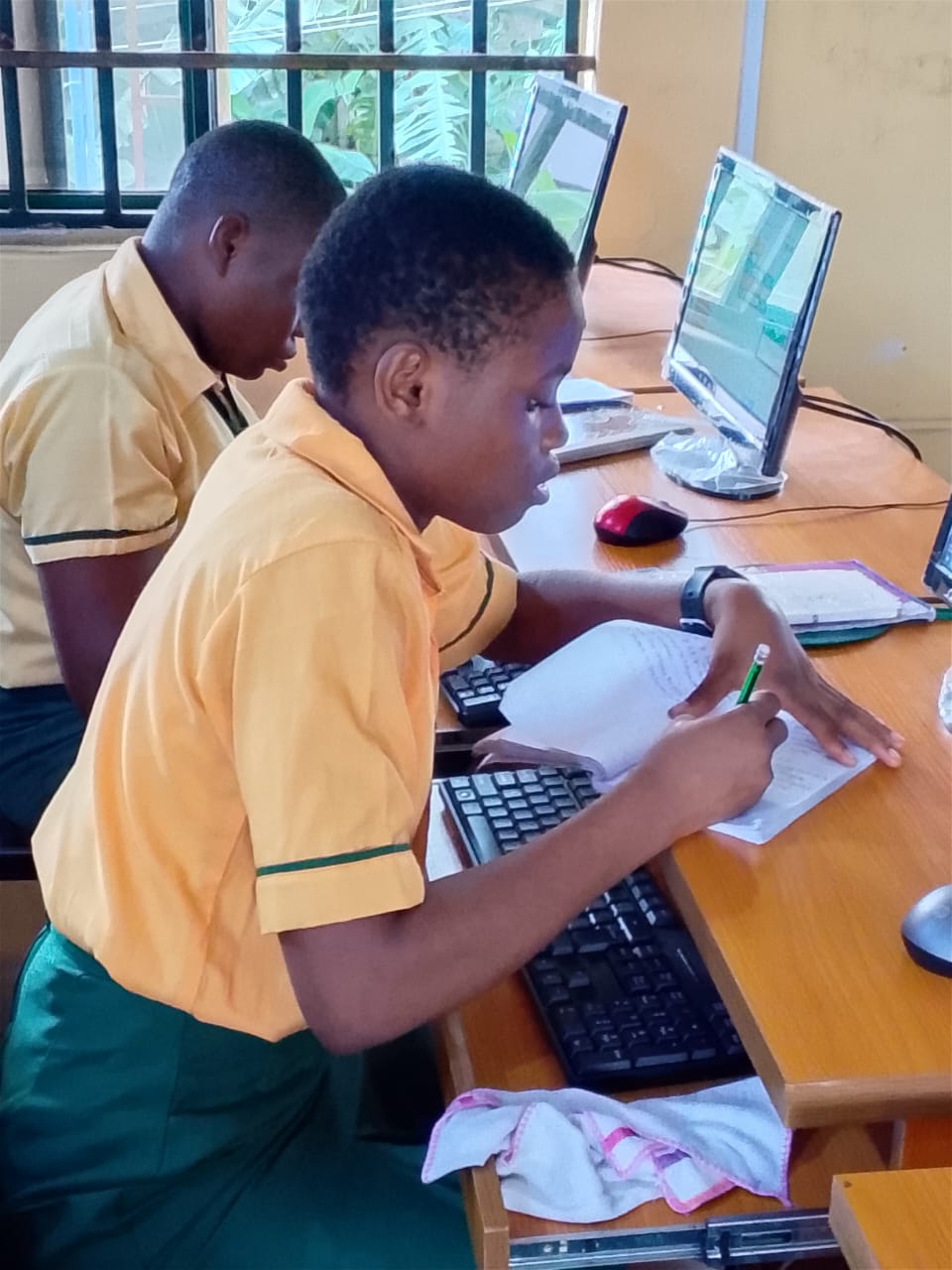
This is why we made the decision, from the very start, to focus digital skills training on school-age children rather than waiting until university or the job market to intervene. Skills compound. A twelve-year-old who learns to code, to think computationally, and to see technology as something they can build with — not just consume — carries that advantage for the rest of their working life. We are not just teaching children to use computers; we are teaching them to see themselves as creators, not just consumers, of digital tools.
But training children is only half the equation. Schools themselves are institutions under enormous administrative strain, often run on paper records and manual processes that consume time and resources better spent on teaching. This is why we also build School Management System tools — because digital transformation has to happen at the institutional level too, not just in the classroom. An efficiently run school is a school with more capacity to actually educate.
Entrepreneurship Is the Multiplier
Here is where I think the conversation about Africa’s digital future often falls short: skills alone do not transform economies. Skills need an outlet. And for most young Africans, that outlet will not be a job at a large corporation — it will be a business they build themselves.
Africa already has the highest rate of entrepreneurial activity in the world by necessity. What we lack is not the entrepreneurial spirit but the infrastructure to let that spirit succeed at scale. This is precisely why access to affordable web hosting and domain registration matters so much more than it might appear on the surface. A small trader in Enugu or a tailor in Kano with a website and a registered domain is no longer confined to foot traffic in a local market — they are, in principle, competing and trading on the same internet as businesses anywhere in the world.
When we help small and medium enterprises take their businesses online, we are not just providing a technical service. We are handing them a multiplier. A business with a digital presence can reach customers beyond its immediate geography, build trust through a professional online identity, and operate with the kind of visibility that used to require far more capital than most SMEs have access to.
Where the Two Meet
The real transformation happens where digital skills training and entrepreneurship intersect. A generation trained from childhood to think digitally does not need to be convinced to start online businesses later — it is second nature to them. And an SME support ecosystem that makes it easy and affordable to get online ensures that when these digitally fluent young people are ready to build something, the infrastructure is there to support them.
This is not a theoretical pipeline. It is one we see working in practice: children we have trained who go on to build small digital projects of their own; school administrators who, freed from manual paperwork, invest more energy into curriculum; small business owners who, for the first time, have customers finding them online rather than only through word of mouth.
What Needs to Happen Next
None of this, scales on the effort of individual companies alone. If Africa is serious about turning its demographic weight into economic strength, three things need to happen faster than they currently are:
First, digital literacy needs to be treated as a foundational subject, not an elective — embedded in curricula from primary school, not introduced as an afterthought in secondary school or left entirely to private providers like us to fill the gap.
Second, the cost of digital infrastructure — hosting, domains, payment processing, connectivity — needs to keep coming down, and policy should actively support that, because every naira an SME doesn’t have to spend on infrastructure is a naira it can spend on growth.
Third, we need far more patient capital and support directed at the companies doing this unglamorous, foundational work of digital enablement. The flashy consumer apps get the headlines, but the infrastructure layer — training, tools, and access — is what everything else is built on.
Africa does not need to wait for a future economy to arrive. The tools to build it are already available. What is required now is the discipline to put digital skills and entrepreneurial capability into the hands of as many young Africans as possible, as early as possible, and to keep clearing the path so that what they build can actually reach the world.
That is the work we have committed ourselves to at MODE Digital Creations. It is work I believe every serious stakeholder in Africa’s future needs to be part of.
Davids Ogan is the Managing Director of MODE Digital Creations Limited.
Related
Discover more from Daily Media NG
Subscribe to get the latest posts sent to your email.
Education
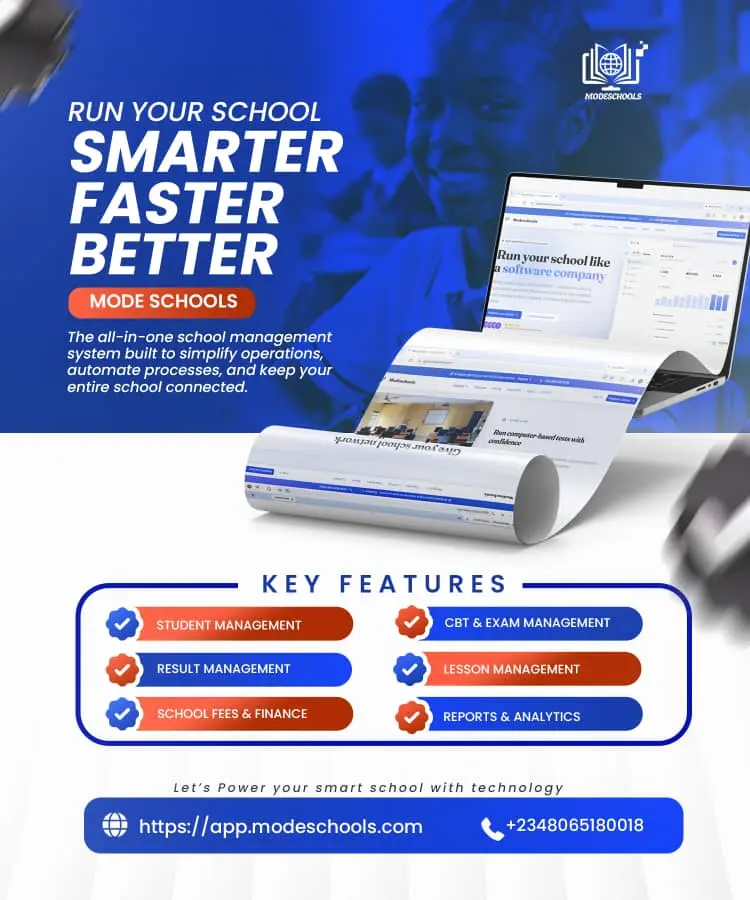
Introducing Modebills: The Ultimate All-in-One School Management Ecosystem
Published
3 months agoon
June 4, 2026
Introducing Modebills: The Ultimate All-in-One School Management Ecosystem
Running a school is a balancing act. Between tracking attendance, managing fees, reviewing lesson plans, and keeping parents in the loop, school administrators and teachers often find themselves buried under mountains of paperwork.
Related Posts
At MODE Digital Creations Limited, we believe technology should do the heavy lifting so you can focus on what matters most: education.
That is why we are thrilled to introduce Modebills—a comprehensive, next-generation school management system designed to streamline every aspect of your institution’s daily operations.
Revolutionizing School Assessments
What sets Modebills apart is its robust, built-in examination engine. Say goodbye to fragmented external platforms. With Modebills, schools can seamlessly create, schedule, and administer internal exams and tests directly within the system, making grading and performance tracking smoother than ever.
Key Features At A Glance
Modebills bridges the gap between administrators, teachers, students, and parents with tailored portals:
- Comprehensive School Admin Portal: The central nervous system of your school. Effortlessly manage school affairs, track student attendance, and handle fee collections with transparent, automated billing.
- Logistics & Operations Hub: Seamlessly allocate and monitor hostel accommodations and school bus routes to ensure student safety and logistical efficiency.
- Teacher Empowerment Tools: Teachers can draft, submit, and manage lesson plans, track course delivery milestones, and manage classroom data all in one place.
- Real-Time Parent Dashboard: Keep parents actively involved in their child’s academic journey. Parents get instant access to grades, exam results, fee statements, and performance insights.
Why Choose Modebills?
Efficiency Meets Innovation. Modebills isn’t just a tool; it’s an ecosystem that reduces administrative burnout, improves parent satisfaction, and gives educators their time back.
Ready to transform your school’s digital infrastructure?
Let’s build the future of education together.
Contact MODE Digital Creations Limited today on +2348065180018 to schedule a free demo!
#EdTech #SchoolManagement #DigitalTransformation #Modebills #MODEDigitalCreations #EducationInnovation
Related
Discover more from Daily Media NG
Subscribe to get the latest posts sent to your email.
Social Media + Website: How Nigerian Small Businesses Use Both Together to Win More Customers
Introducing Modebills: The Ultimate All-in-One School Management Ecosystem
Igniting Futures: The ModeCodersClub Story
How a Website Helped My Niger Delta Business Attract Corporate Clients in Nigeria
Why Nigerian Businesses Are Losing Customers Without a Website — And How to Fix It
The Transforming Power of Education: Digital Education Transformation in the Niger Delta and Beyond
From Oil Fields to Mind Fields: How Digital Skills Initiatives Can Power Nigeria’s Next Economy
Digital Skills and Entrepreneurship: The Twin Engines Africa Needs
Akara Won’t Build Nigeria’s Future
GOTV Customer Care Line, Emails, Whatsapp, Phone numbers, Website
How to Start Charcoal Export business in Nigeria
Top 10 Most Liked Videos On YouTube
| M | T | W | T | F | S | S |
|---|---|---|---|---|---|---|
| 1 | 2 | 3 | 4 | 5 | 6 | |
| 7 | 8 | 9 | 10 | 11 | 12 | 13 |
| 14 | 15 | 16 | 17 | 18 | 19 | 20 |
| 21 | 22 | 23 | 24 | 25 | 26 | 27 |
| 28 | 29 | 30 | ||||