
Business
Why Nigerian Businesses Are Losing Customers Without a Website — And How to Fix It

Published
5 months agoon
By
Editorial
Post Links
Why Nigerian Businesses Are Losing Customers Without a Website — And How to Fix It
The real cost of digital invisibility for Nigerian SMEs in 2026 — with data, real scenarios, and a practical path forward.
Related Posts
By Mode Digital Creations | Web Hosting Services | 2026
The Customer You Never Knew You Lost
There is a customer loss that is harder to feel than any other kind.
Not the customer who complained and left. Not the customer who tried your product and didn’t come back. Not the customer who chose a competitor you know by name.
The customer you never knew you lost is the one who searched Google for exactly what you sell, found nothing where your business should have been, and bought from someone else — without you ever knowing they existed.
This happens to Nigerian businesses without websites every day. Multiple times a day. Across every industry, every city, every market category.
You don’t receive a notification. You don’t see it in your sales figures as a line labelled “missed opportunity.” You simply keep running your business as you always have, serving the customers who find you through word of mouth and WhatsApp referrals, not knowing that there is an entire category of customers — corporate buyers, diaspora Nigerians, new city residents, internet-first millennials — who looked for you and couldn’t find you.
This article is about that invisible cost. It is also about what it takes to end it.
The Market Context: 39 Million Businesses, Most of Them Invisible
Nigeria’s digital economy contributes about ₦7 trillion to GDP and is supported by more than 39 million micro, small, and medium enterprises. The SMEDAN-registered SME count has now exceeded 41 million, making Nigeria one of the most entrepreneurially active countries in the world.
But activity and visibility are not the same thing.
Many of these businesses still face hurdles including limited digital skills, unreliable infrastructure, and high operational costs — which have significantly slowed the adoption of dedicated websites. The result is a remarkable paradox: Nigeria has one of the world’s most vibrant small business ecosystems, and most of it is invisible to the internet.
Mobile internet subscribers in Nigeria have risen to 141 million, and internet usage has hit an all-time high. Nigerians spend significant time online engaging with content, and the businesses and corporations that maximise this are capturing customers that offline-only businesses cannot reach.
Research conducted by the Nigerian Communications Commission in 2024 found that 67% of SMEs in Southeast Nigeria cite gaps in digital literacy, while 54% report poor internet infrastructure as the major reason hindering their companies from optimal use of digital tools.
The barriers are real. They do not change what the customer is doing while Nigerian businesses wait to be ready. The customer is online, searching, and buying — from businesses that are there.
Part One: The Seven Customers You Are Losing Right Now
Understanding what a missing website costs requires understanding who specifically is unable to find you — and why each of them represents significant lost revenue.
Customer 1: The Google Searcher
This is the most numerous and most immediate customer loss.
Every day, Nigerians type search queries that include your industry, your city, and your product category into Google. “Caterers in Port Harcourt.” “Tailoring services Warri.” “Furniture Lagos Island.” “IT support Abuja.” “Printing company Asaba.”
Google returns a list. The businesses on that list get the customer’s attention. The businesses not on that list do not exist, as far as that customer is concerned.
Without a website optimised for search, your business cannot appear in these results. Your WhatsApp number does not appear in Google search. Your Instagram page may appear — weakly, inconsistently, and without the full business information a buyer needs to make a decision. Only a properly configured website with the right content appears reliably in Google search results for industry-relevant queries.
The volume of this loss is difficult to estimate because you have no visibility into searches that don’t find you. But consider: if your industry is searched 1,000 times a month in your city, and your competitors have websites while you do not, you are receiving zero of those searches. The cost compounds daily.
Customer 2: The Corporate Buyer
This customer loss is the most financially significant and the least understood by Nigerian SME owners.
Corporate buyers — companies, NGOs, government contractors, multinational subsidiaries — typically have a formal vendor onboarding process. Before they can pay any vendor, their procurement and accounts departments require verification: a business registration document, a tax identification number, and a functional, professional website.
Not a WhatsApp Business page. Not a Facebook profile. A website.
Without one, you cannot be onboarded as a vendor by any corporation that follows standard procurement practices. It does not matter how good your product is or how strong your personal relationship with the procurement officer. The system requires a website. Without it, the sale does not happen.
This single requirement is responsible for Nigerian SMEs losing corporate contracts worth millions of naira annually — contracts they never know they missed because the initial search never returned their details.
Customer 3: The Diaspora Nigerian
Seventeen million Nigerians live outside Nigeria. They send remittances, order gifts for family members back home, book services for aging parents, source products from Nigerian makers and craftspeople, and hire Nigerian service providers for projects in their home communities.
This is a significant, consistent, and underserved market.
But diaspora Nigerians cannot call a local number easily. They will not send money to a WhatsApp contact they cannot verify independently. They are careful — understandably so — about financial transactions with businesses they cannot confirm are legitimate.
A professional website with clear business information, a physical address or service area, and secure contact options is what converts a diaspora Nigerian from a potential customer into an actual one. Without it, they move on to the next option — often a business outside Nigeria that has the digital presence they require.
Customer 4: The New City Resident
Nigeria’s urban population continues to grow rapidly. Every month, people relocate to new cities for work, education, family, and opportunity. When they arrive, they do not have the referral networks that long-term residents rely on.
They Google.
“Best dry cleaners in Lekki.” “Reliable plumber Ikeja.” “Fresh fish supplier Yenagoa.” “Generator repair Port Harcourt.”
Their search returns a list. You are or are not on that list. There is no middle ground.
New city residents who find you through search become loyal customers — because you were the one who was visible when they needed something. They were not referred to you through years of relationship-building. They found you because you existed on the internet when they needed what you sell.
Without a website, this customer category — which represents thousands of people in every Nigerian city every month — is entirely inaccessible to you.
Customer 5: The Late-Night Buyer
One of the most underappreciated functions of a business website is its operating hours.
Your business opens at 9am and closes at 6pm. Your website is open at 11:30pm on a Sunday when a customer decides they need your product. Your WhatsApp is asleep. Your phone is on silent. Your shop is locked.
Your website is answering questions, showing your portfolio, displaying your prices, and collecting enquiries.
The corporate buyer who works late and researches vendors after hours. The mother planning a party at midnight. The entrepreneur comparing suppliers during a weekend work session. All of them are potential customers who are active outside your business hours.
A website captures this activity. A business without a website has no presence during the hours when a significant proportion of research and purchasing decisions are made.
Customer 6: The Verification Seeker
Nigerian consumer trust has been shaped by years of online fraud, poor delivery follow-through, and financial scams. The result is a consumer culture that verifies before it trusts.
When a customer receives a recommendation for your business — from a friend, a family member, a social media post — their first instinct in 2026 is to check whether you are real. They Google your business name. They look for a website. They want to see a professional presence that confirms you are a legitimate, established business before they hand over money or commit to a service.
If they find nothing, doubt is introduced — even when the personal recommendation was strong. Many of them proceed to another option rather than risk a transaction with a business they cannot independently verify.
A website is not just a sales tool. It is a trust signal. It answers the question “is this business real?” with a visible, professional, reassuring “yes.”
Customer 7: The International Buyer
Nigeria’s export potential in handcrafted goods, artisan products, creative services, fashion, food, and professional services is significant and growing. The African diaspora abroad, international buyers interested in Nigerian-made products, and remote clients for Nigerian professional services are all reachable markets.
They are unreachable without a website.
An international buyer cannot verify a Nigerian business from a WhatsApp number or an Instagram page alone. They require a professional web presence with clear product or service descriptions, pricing or contact information, and some form of secure communication channel. Without this, Nigeria’s extraordinary artisan and professional sector remains largely invisible to the international buyers who would pay premium prices for its products.
Part Two: The Hidden Costs — What Digital Invisibility Actually Costs Your Business
The customer losses described above translate into specific, quantifiable business costs that compound over time.
The Revenue Loss
Estimating the specific revenue loss from missing a website requires knowing your industry’s search volume, average transaction value, and conversion rate — figures that vary significantly across sectors. But the directional estimate is straightforward.
If your industry generates 500 searches per month in your city, and 10% of those searches result in a purchase decision, and the average transaction value is ₦50,000 — that is ₦2.5 million in purchase decisions per month flowing through Google in your category. The businesses with websites are capturing some portion of that. You are capturing zero.
Over twelve months, the compounding opportunity cost of zero search presence in a category with active online demand is substantial by any measure.
The Brand Perception Cost
Nigerian business culture has long placed high value on physical presence and personal relationship. These are genuinely important. They will not disappear.
But perception is shifting, particularly among the millennial and Gen-Z customers who represent Nigeria’s fastest-growing consumer cohort. For these customers, a business without a website is not just hard to find — it is perceived as less established, less professional, and less trustworthy than an equivalent business with one.
This perception gap translates directly into pricing power. A business with a professional website and a clear brand identity can command higher prices for equivalent services than a business that looks informal and unestablished. The website is not just a sales channel. It is a signal of quality that affects how much customers are willing to pay.
The Referral Amplification Cost
Word of mouth remains the most powerful marketing channel for Nigerian SMEs. A satisfied customer who recommends your business to ten friends is extraordinarily valuable.
But word-of-mouth recommendations in 2026 increasingly convert through digital verification. The ten friends who receive the recommendation will Google your business before acting on it. If they find nothing, a proportion of them will not follow through — not because the recommendation was unreliable, but because they could not verify what they were told.
A website amplifies your word-of-mouth marketing by converting recommendations into confirmed purchases at a higher rate. Without one, you are losing a portion of the referral value you have already earned.
Part Three: The Objections — Addressed Honestly
Nigerian business owners who have not yet built a website are not, for the most part, unaware of the internet. They have reasons for the delay. Here are the most common, addressed without condescension.
“I’m doing fine without one.”
This is the most common and most difficult objection to respond to, because it is often genuinely true in the short term.
A business that has operated successfully for years through word of mouth and personal relationships is doing something right. The relationships are real. The product or service quality is real.
The problem is that “doing fine” describes the present while the market is changing under it. The corporate buyers who increasingly require website verification, the new city residents who have no referral network, the diaspora customers who cannot transact without verification — these customer categories are growing. Word of mouth alone is a shrinking channel relative to the total market, not because relationships are becoming less important but because the market is adding new customer types that relationships alone cannot reach.
“Doing fine” is not evidence that a website would not make you more fine, significantly and measurably, within six months of going live.
“My industry is not online.”
Every industry in Nigeria now has active online demand. The construction company whose clients are all corporate — those corporate clients verify websites before onboarding. The caterer whose clients are all referrals — the referrals Google before they call. The fashion designer whose clients are all personal connections — new clients who are not personal connections start online.
The question is not whether your industry is online. It is what proportion of your potential market is online — and what you are leaving for your competitors by not being there.
“A website costs too much.”
This objection was more valid five years ago than it is in 2026.
The cost of a professional, functional business website from Mode Digital is structured to be recoverable from a single new customer — often within the first month of the site going live. A website that generates one new corporate contract, or captures one diaspora customer’s order, or converts one new city resident’s search query into a recurring customer, has already paid for itself.
The question is not whether the cost is too high. It is whether the expected return exceeds the cost — and for any Nigerian business operating in a category with online demand, the expected return is almost always positive.
“I have Facebook and WhatsApp. That’s enough.”
Facebook and WhatsApp are excellent tools. They are not substitutes for a website.
Facebook pages do not appear reliably in Google search results for industry-relevant queries. WhatsApp numbers do not appear in Google at all. Neither provides the vendor verification credentials that corporate buyers require. Neither functions effectively as a 24/7 sales presence for international buyers in different time zones.
Facebook and WhatsApp are tools for maintaining relationships with people who already know you. A website is a tool for reaching people who don’t — and converting them into people who do.
The businesses winning in the Nigerian market in 2026 are not choosing between these tools. They use all of them: a website for Google presence and corporate credibility, WhatsApp for customer communication and conversion, Facebook and Instagram for content and community.
Part Four: What a Mode Digital Website Does for Your Business
Mode Digital Creations builds professional, mobile-optimised, Google-ready websites for Nigerian businesses — with local support from a Nigerian team that understands the specific context of operating in this market.
Every Mode Digital website is built to address the specific customer losses described in this article.
For the Google searcher: Every website we build is search-optimised from day one — with the content, structure, and technical configuration that tells Google what you sell, where you operate, and who your customers are. We do not build websites that cannot be found.
For the corporate buyer: Mode Digital websites include the professional design, business information architecture, and credibility signals that corporate procurement processes require. Your website will verify your business legitimately to any procurement officer who checks it.
For the diaspora customer: Our websites include WhatsApp integration, secure contact forms, and clear service or product descriptions that allow Nigerian diaspora customers to transact confidently from anywhere in the world.
For the new city resident: Local SEO configuration ensures your business appears in “near me” and city-specific searches, capturing the customers who are new to your area and relying on Google to find what they need.
For the late-night buyer: A Mode Digital website is your 24/7 sales presence — capturing enquiries, displaying your portfolio, and answering customer questions at any hour, on any device.
For the verification seeker: Professional design, clear business information, and a consistent brand identity across your website and social channels provide the trust signals that convert sceptical Nigerian consumers into confident buyers.
For the international buyer: Our websites are built for the international web standard — fast, secure, mobile-responsive, and formatted for the expectations of buyers from any country who encounter your business online.
What Mode Digital does not do is build websites and disappear. We are a Nigerian company from the Niger Delta. We are here when your website needs an update, when hosting needs renewal, when you want to add a product category or a booking system or a new page. Local accountability is not a feature we advertise — it is the structure of how we operate.
Part Five: How to Start — A Practical Guide
If this article has convinced you that your business needs a website, here is the practical sequence for getting one built with Mode Digital.
Step 1: The Conversation
DM @modecbt on X or Instagram, or send ‘WEBSITE’ to our official line (+2348065180018). We respond with a simple set of questions about your business: what you sell, who your customers are, what you want the website to do, and what your budget parameters are.
No jargon. No sales pressure. A straightforward conversation about what you need and whether we are the right fit to deliver it.
Step 2: The Brief and Proposal
Based on the conversation, we provide a clear written brief confirming what we will build and a fixed price quote. You know the full cost before any payment changes hands.
Step 3: The Build
We build your website to the agreed specification — typically within two to three weeks for a standard business site. You review at key stages and provide feedback. We adjust until it is right.
Step 4: The Launch and Setup
We launch your website, configure your hosting, and walk you through the basics of managing your content. You receive everything you need to keep the site current without depending on us for every small change.
Step 5: Ongoing Support
We remain available for hosting management, updates, design changes, and technical support. Your website is an ongoing investment, not a one-time transaction. We treat it accordingly.
Conclusion: Every Day Without a Website Is a Day of Lost Customers
The customers described in this article are not hypothetical. They searched for businesses in your category today. They will search again tomorrow.
Some of them found your competitors. Some of them found nothing and postponed the purchase. Some of them will search again next week with the same unmet need.
A website does not guarantee you will win every search. It guarantees that you will be in the consideration set when a customer who needs exactly what you sell is looking for it online.
Without one, you are not in the consideration set. You do not exist, from that customer’s perspective.
Nigeria has over 39 million SMEs. The ones that build their digital presence first in their local market will capture the search traffic, the corporate contracts, the diaspora orders, and the new resident customers that their competitors are still leaving on the table.
That advantage will erode as more businesses build websites. But it is available now, in 2026, in most Nigerian cities and most industry categories.
The question is whether you will claim it.
Mode Digital Creations Limited builds professional websites and provides web hosting services for Nigerian businesses. We are a Nigerian company from the Niger Delta, building for Nigerian businesses with local support and community accountability.
To start a conversation about your business website: DM ‘WEBSITE’ to @modecbt on X or Instagram modecbt.com or call:+2348065180018
#NigerianBusiness #SMENigeria #WebHostingNigeria #DigitalPresence #ModeDigital #NigerianEntrepreneur #BusinessWebsite #DigitalMarketing #NigerianSME #MakeMoneyOnline #WebsiteNigeria #NigerDelta #NigerianTech2026
Related
Discover more from Daily Media NG
Subscribe to get the latest posts sent to your email.

You may like
-


Social Media + Website: How Nigerian Small Businesses Use Both Together to Win More Customers
-


How a Website Helped My Niger Delta Business Attract Corporate Clients in Nigeria
-


Best Affordable Web Hosting for Nigerian Small Businesses in 2026: Your Complete Guide
-


How to Build a Professional Website for Nigerian SMEs in 2026: Complete Guide with Domain Tips, Cost Comparisons, and Affordable Hosting Solutions
-


How to Create a Church Website in Nigeria
-


How create a beautiful real Estate Website in Nigeria
Click to comment
Business
Digital Skills and Entrepreneurship: The Twin Engines Africa Needs
Published
2 months agoon
August 25, 2026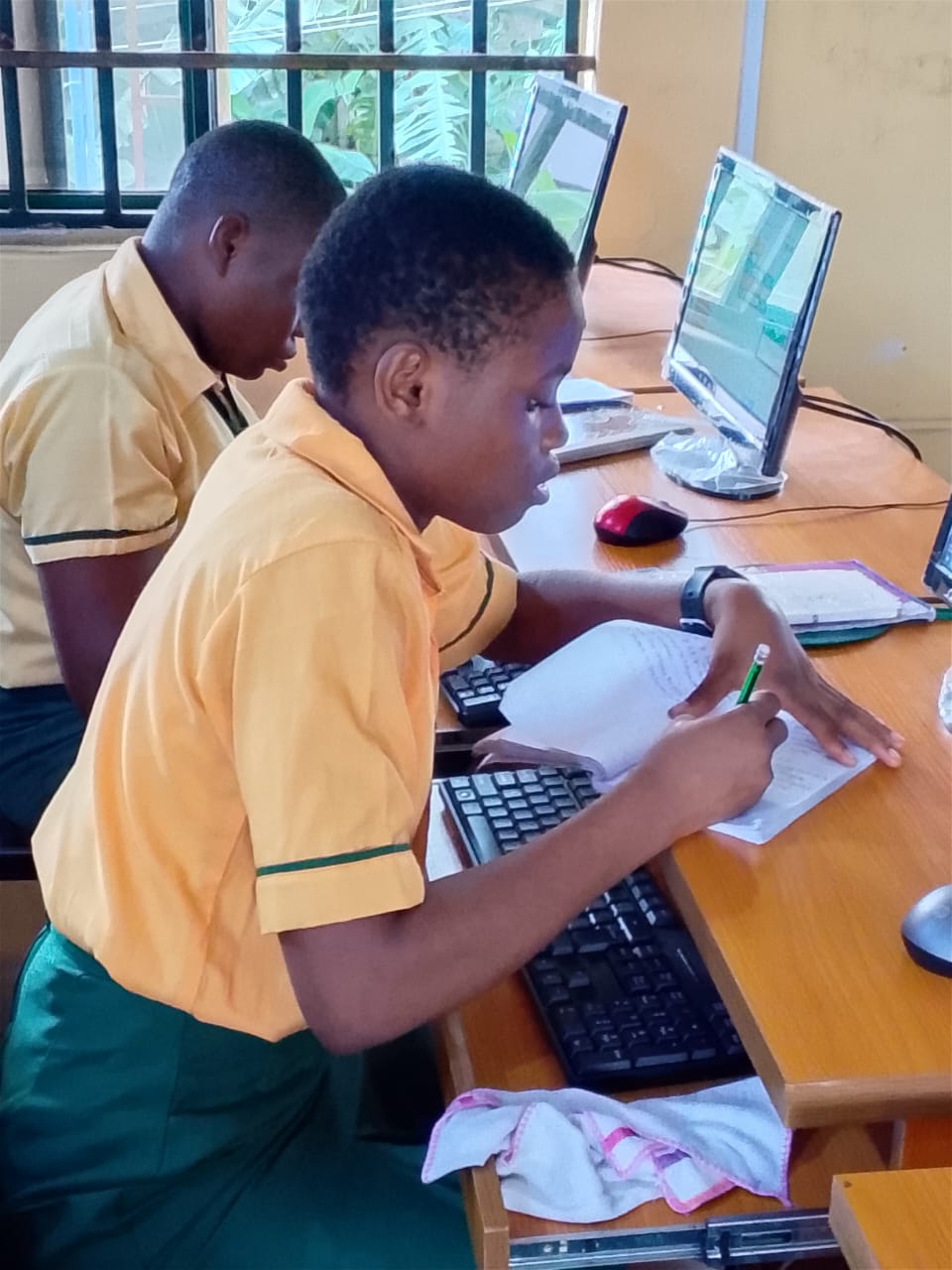
Digital Skills and Entrepreneurship: The Twin Engines Africa Needs
Africa’s population is its greatest asset and, if we get the next decade wrong, its greatest missed opportunity. By 2030, hundreds of millions of young Africans will be entering the workforce. The question that should keep every policymaker, educator, and business leader on the continent awake at night is simple: what will these young people actually be able to do?
Related Posts
I have spent the last several years building a company around a conviction that shapes everything we do at MODE Digital Creations: Africa’s economic future will not be decided by the resources beneath our soil, but by the skills inside our people. Digital skills training and entrepreneurship are not parallel tracks running alongside economic development — they are the tracks economic development runs on.
The Skills Gap Is Not a Future Problem, It’s a Present One
We often talk about the “future of work” as though it’s a distant horizon. It isn’t. The future of work is already here, and it is digital. Yet across much of Africa, our education systems are still preparing children for an economy that no longer exists in its old form. A student can graduate secondary school having never typed a document, built a spreadsheet, or understood how the internet actually works as a tool for commerce and communication.
This is why we made the decision, from the very start, to focus digital skills training on school-age children rather than waiting until university or the job market to intervene. Skills compound. A twelve-year-old who learns to code, to think computationally, and to see technology as something they can build with — not just consume — carries that advantage for the rest of their working life. We are not just teaching children to use computers; we are teaching them to see themselves as creators, not just consumers, of digital tools.
But training children is only half the equation. Schools themselves are institutions under enormous administrative strain, often run on paper records and manual processes that consume time and resources better spent on teaching. This is why we also build School Management System tools — because digital transformation has to happen at the institutional level too, not just in the classroom. An efficiently run school is a school with more capacity to actually educate.
Entrepreneurship Is the Multiplier
Here is where I think the conversation about Africa’s digital future often falls short: skills alone do not transform economies. Skills need an outlet. And for most young Africans, that outlet will not be a job at a large corporation — it will be a business they build themselves.
Africa already has the highest rate of entrepreneurial activity in the world by necessity. What we lack is not the entrepreneurial spirit but the infrastructure to let that spirit succeed at scale. This is precisely why access to affordable web hosting and domain registration matters so much more than it might appear on the surface. A small trader in Enugu or a tailor in Kano with a website and a registered domain is no longer confined to foot traffic in a local market — they are, in principle, competing and trading on the same internet as businesses anywhere in the world.
When we help small and medium enterprises take their businesses online, we are not just providing a technical service. We are handing them a multiplier. A business with a digital presence can reach customers beyond its immediate geography, build trust through a professional online identity, and operate with the kind of visibility that used to require far more capital than most SMEs have access to.
Where the Two Meet
The real transformation happens where digital skills training and entrepreneurship intersect. A generation trained from childhood to think digitally does not need to be convinced to start online businesses later — it is second nature to them. And an SME support ecosystem that makes it easy and affordable to get online ensures that when these digitally fluent young people are ready to build something, the infrastructure is there to support them.
This is not a theoretical pipeline. It is one we see working in practice: children we have trained who go on to build small digital projects of their own; school administrators who, freed from manual paperwork, invest more energy into curriculum; small business owners who, for the first time, have customers finding them online rather than only through word of mouth.
What Needs to Happen Next
None of this, scales on the effort of individual companies alone. If Africa is serious about turning its demographic weight into economic strength, three things need to happen faster than they currently are:
First, digital literacy needs to be treated as a foundational subject, not an elective — embedded in curricula from primary school, not introduced as an afterthought in secondary school or left entirely to private providers like us to fill the gap.
Second, the cost of digital infrastructure — hosting, domains, payment processing, connectivity — needs to keep coming down, and policy should actively support that, because every naira an SME doesn’t have to spend on infrastructure is a naira it can spend on growth.
Third, we need far more patient capital and support directed at the companies doing this unglamorous, foundational work of digital enablement. The flashy consumer apps get the headlines, but the infrastructure layer — training, tools, and access — is what everything else is built on.
Africa does not need to wait for a future economy to arrive. The tools to build it are already available. What is required now is the discipline to put digital skills and entrepreneurial capability into the hands of as many young Africans as possible, as early as possible, and to keep clearing the path so that what they build can actually reach the world.
That is the work we have committed ourselves to at MODE Digital Creations. It is work I believe every serious stakeholder in Africa’s future needs to be part of.
Davids Ogan is the Managing Director of MODE Digital Creations Limited.
Related
Discover more from Daily Media NG
Subscribe to get the latest posts sent to your email.

Akara Won’t Build Nigeria’s Future
In late June 2026, First Lady Remi Tinubu sparked intense debate by stating that starting an akara-frying business, roasting corn, or selling kuli-kuli “doesn’t take a lot of money.” She framed it within her Renewed Hope Initiative’s small grants program (reportedly ₦50,000–₦70,000), positioning these micro-enterprises as practical paths to hope and self-reliance amid economic hardship.
Related Posts
Defenders quickly rallied online: “It’s honest work,” “Better than idleness,” “Many successful people started from roadside trading,” “She is just being realistic.” These arguments contain grains of truth—Nigeria’s informal sector employs the vast majority of the workforce (estimates range 60–90% depending on the source) and has long served as a safety net. Any dignified labor deserves respect.
But the defense misses the larger point. In 2026, promoting roadside akara stands and corn roasting as a flagship solution or aspirational model for Nigerian youths is not empowering realism. It is backward thinking that risks locking a generation into low-productivity survival mode while the rest of the world races ahead in digital skills, STEM, and artificial intelligence.
The Hard Limits of “Little Money” Micro-Businesses
Let’s be clear-eyed. Starting to fry akara or roast corn requires relatively low upfront capital compared to opening a factory or tech startup. A few thousand naira for beans, oil, charcoal or gas, basic equipment, and a spot by the roadside can get you going. Grants help some women cover that initial hurdle.
Yet this model faces brutal realities in today’s Nigeria:
– High and volatile input costs amid ~15.9% inflation (May 2026). Food prices, especially staples like beans and corn, fluctuate wildly. Energy costs for frying remain punishing due to unreliable grid power.
– Thin margins and fierce competition. Everyone with “little money” can do the same thing. Saturated markets mean price wars, long hours, and vulnerability to weather, vendor harassment, or sudden policy changes (e.g., market clearances).
– Limited scalability and wealth creation. These businesses rarely generate significant surplus for reinvestment, formalization, or generational wealth. They often perpetuate underemployment rather than solve it.
– Opportunity cost. Time spent perfecting akara frying is time not spent learning high-leverage skills that multiply earnings exponentially.
Success stories exist—some vendors educate children or build houses through sheer grit. But policy cannot be built on anecdotes and survivorship bias. Most people in these trades remain in precarious, low-income cycles. Celebrating the informal sector’s size as a virtue ignores that it largely reflects the failure to create enough high-productivity formal jobs.
The World in 2026 Demands Different Skills
We are no longer in an era where manual, low-skill, localized trading represents the ceiling of realistic ambition for a nation with Nigeria’s demographic profile—one of the world’s youngest and fastest-growing populations.
– Digital skills and AI are the new basic literacy. Coding, data analysis, digital marketing, prompt engineering, AI tool usage, cybersecurity, and e-commerce are accessible, high-demand, and borderless. A skilled Nigerian youth can build apps, offer freelance services globally via platforms, or work remotely for companies paying in dollars—without needing physical roadside space or battling local inflation on every ingredient.
– STEM drives real transformation. Agritech startups are using drones, sensors, and AI for precision farming—boosting yields of corn and beans while reducing waste. Food processing can move beyond open-fire frying to hygienic, scalable, packaged products with export potential and branding. Renewable energy, biotech, software development, and engineering create jobs that actually scale and attract investment.
– Nigeria already shows what is possible. The fintech boom (Paystack, Flutterwave, and others) proved young Nigerians can build world-class digital companies. Tech hubs in Lagos and beyond, remote work success stories, and diaspora talent demonstrate capacity. The question is whether policy and cultural messaging amplify this or default to the lowest-common-denominator hustle.
An akara seller competes locally with razor-thin margins. A developer or AI-fluent entrepreneur can create value that serves thousands or millions and captures global income. One path sustains survival; the other builds prosperity and sovereignty in a knowledge economy.
Addressing the Defenses Directly
“It gives immediate hope and is better than nothing.”
Short-term palliatives have a role during crisis. But leadership’s vision should not stop at survival grants for saturated micro-trades. Hope that endures comes from equipping people with skills that match the economy of 2030 and beyond—not preparing them for 1980s-style street vending in an AI age.
“Many people succeeded from akara and similar businesses.”
Individual grit is admirable. Systemic progress requires scalable pathways. Most street vendors do not become millionaires or employ dozens. Countries that industrialized or digitized did so by moving labor up the value chain, not by romanticizing the bottom rung.
“Not everyone can or wants to be a tech bro.”
True. Societies need diversity of work—farmers, artisans, service providers, and yes, food vendors. But that does not mean defaulting national ambition to the easiest entry barrier activity. Modern vocational training can blend traditional trades with digital tools (e.g., WhatsApp/Instagram marketing for food sellers, inventory apps, delivery platforms, or agritech for producers). Everyone benefits from baseline digital literacy and critical thinking.
“Dignity in all honest work.”
Absolutely. No work is beneath anyone. The issue is aspiration and human capital development. A nation that tells its educated or educable youth that frying akara is the realistic horizon subtly signals low expectations. Nigerian youths deserve—and the country needs—higher standards.
What Forward-Looking Leadership Should Champion
Instead of (or alongside) micro-grants for akara stands, prioritize:
– Education reform integrating coding, AI basics, data literacy, and digital entrepreneurship from secondary school onward. Strengthen STEM pipelines and technical/vocational education in high-value areas (renewables, precision agriculture, software, advanced manufacturing).
– Support for scalable entrepreneurship—larger funding, incubators, and mentorship focused on tech, agritech, green energy, and digital services. Make it easier to formalize and grow beyond one-person operations.
– Infrastructure that multiplies productivity: Reliable power (foundational for both digital work and modern food businesses), broadband, and skills training centers.
– Hybrid empowerment: Teach traditional micro-entrepreneurs digital tools so they can market smarter, manage better, access finance via fintech, and potentially scale or pivot.
– Cultural and policy signaling: Celebrate Nigerian tech founders, innovators, and global remote workers as loudly as (or louder than) survival stories. Position Nigeria as a serious player in Africa’s digital and innovation future.
The Choice Before Us
Nigeria stands at a fork. One road doubles down on low-productivity informal activities as the default solution—perpetuating cycles of hardship even as grants provide momentary relief. The other invests aggressively in human capital for a digital, AI-augmented, STEM-powered economy—unlocking the demographic dividend, reducing brain drain, creating high-value jobs, and building resilience against global shifts.
Remi Tinubu’s comments reflect a common instinct: meet people where they are with practical, low-barrier ideas. That instinct has value in immediate relief. But when elevated as a prominent message from high office, it risks normalizing low aspiration at precisely the moment Nigeria needs bold, future-oriented thinking.
The era of relying on roadside akara economics as a national strategy is over. The future belongs to those who code, innovate, process intelligently, build platforms, and harness technology. Nigeria’s young people are capable of far more than frying bean cakes with “little money.” They—and the country—deserve leadership and policies that match that potential.
Let’s raise the bar. The world isn’t waiting.
Related
Discover more from Daily Media NG
Subscribe to get the latest posts sent to your email.
Business
Social Media + Website: How Nigerian Small Businesses Use Both Together to Win More Customers
Published
5 months agoon
June 9, 2026
Social Media + Website: How Nigerian Small Businesses Use Both Together to Win More Customers
Why Nigerian business owners who treat social media and their website as competitors are losing to the ones who treat them as a team — and exactly how to build that team.
Related Posts
By Mode Digital Creations | Web Hosting Services | 2026
The Argument That Is Keeping Nigerian Businesses Small
In Nigerian business circles, there is a quiet argument that has been running for years.
On one side: “Social media is enough. I have 10,000 Instagram followers. My WhatsApp broadcast reaches 500 people. I don’t need a website.”
On the other: “You need a proper website. Social media is not a substitute for a real digital presence.”
Both sides are wrong.
Not because either premise is false — social media is genuinely powerful for Nigerian businesses, and a website genuinely provides things social media cannot. Both are true.
The error is in treating these as competing options, as if choosing one means abandoning the other. The businesses winning in the Nigerian market in 2026 are not choosing between social media and a website. They are building a system where each does what it does best, feeding into the other, creating a customer acquisition machine that works while the business owner sleeps.
This article explains that system — specifically, practically, for Nigerian businesses operating in the Nigerian market.
Part One: The Nigerian Digital Landscape in 2026 — What the Data Shows
Before explaining the strategy, the market context deserves honest examination. Because the Nigerian digital landscape has specific characteristics that make this question different here than in any other market.
Nigeria’s active social media users crossed 40 million in 2025, yet engagement rates for most businesses remain embarrassingly flat — because the majority are copying strategies built for Silicon Valley audiences and applying them to an Oshodi market.
Nigeria maintains the world’s highest rates for both brand discovery at 66.9% and product research at 98.2% on social media — meaning Nigerians are more likely to discover and research products on social media than consumers in any other country on earth.
About 14 million Nigerian SMEs used Meta’s family of apps — Facebook, Instagram, WhatsApp — in 2025 to start, run, and expand their businesses, with 81% of online businesses surveyed saying these platforms helped them expand beyond their immediate geographical locations.
These numbers tell a specific story: social media is not optional for Nigerian businesses. It is already the primary discovery and research channel for Nigerian consumers. A business without social media presence is missing the channel through which most Nigerians first encounter brands.
But here is the data that the social-media-is-enough argument ignores:
Build your audience on Instagram and TikTok, then route warm leads to WhatsApp — because while everyone chases Instagram followers, real conversion is happening silently on WhatsApp.
And beyond WhatsApp: real conversion, at scale, at higher average order values, for corporate clients, for diaspora customers, for Google search traffic — happens on websites.
The businesses that understand this are building a two-layer system. Everything else is leaving money in the algorithm.
Part Two: What Social Media Does — and Where It Stops
Understanding how social media and a website work together requires understanding precisely what each one is good at and where each one reaches its limits.
Social media does four things exceptionally well for Nigerian businesses.
It builds awareness and community. Nigerians spend 4+ hours daily online, and social media platforms dominate that time — meaning your customers are scrolling right now, and social media is where they will first encounter your brand. No other channel gets your business in front of people who don’t yet know it exists as efficiently as social media.
It creates trust through content. Behind-the-scenes posts, customer testimonials, product demonstrations, and personality-driven content build the kind of familiarity that makes people comfortable buying from you. Nigeria maintains the world’s highest rate for brand discovery on social media at 66.9% — meaning more Nigerian consumers first encounter brands through social media than consumers anywhere else. That first impression is everything.
It enables direct, personal communication. WhatsApp is the most popular platform in Nigeria, used by over 95% of internet users, and Nigerian consumers trust it more for purchasing decisions because it feels direct and personal. The combination of Instagram for discovery and WhatsApp for conversion is the most effective sales sequence available to Nigerian SMEs right now.
It reaches an existing audience efficiently. Once you have followers, reaching them with new products, promotions, and updates is fast and often free. Your broadcast list, your story views, your post reach — these are real assets that represent real customer relationships.
Where social media stops:
Social media cannot consistently reach people who don’t already know you exist — except through expensive paid advertising. Organic reach on Facebook and Instagram has declined significantly as these platforms prioritise paid content. A follower count of 10,000 does not mean 10,000 people see every post. On Facebook, organic post reach can be as low as 2–5% of your follower count.
Social media cannot provide the verification credentials that corporate buyers require. A corporate procurement officer looking to onboard a vendor needs a website — a business social media page does not satisfy this requirement.
Social media cannot capture Google search traffic. When someone types “catering service in Port Harcourt” into Google, your Instagram page does not appear. Only a website with properly configured search optimisation can capture this traffic.
Social media does not give you full control over your customer relationships. When Instagram changes its algorithm, your reach changes — without your consent and without notice. When WhatsApp changes its broadcast policies, your ability to reach customers changes. A website and an email list are assets you own and control.
Part Three: What a Website Does — and Why It Amplifies Social Media
A website is not a replacement for social media. It is the foundation that makes social media more valuable.
Here is what a professional website does that social media cannot:
It captures Google search traffic. When a potential customer who has never heard of you searches for what you sell, a website is the only digital asset that can appear in those results. Nigerian internet users now spend an average of 6 hours 38 minutes daily online, and a significant portion of that time includes Google searches for products and services. A website is your presence in those searches. Social media has no equivalent capability.
It converts corporate buyers. Every Nigerian company, NGO, and government contractor that buys from vendors requires a verified website for their onboarding process. This is not a preference — it is a procurement requirement. Without a website, this entire customer category is inaccessible to you regardless of how active your social media presence is.
It provides 24/7 sales infrastructure. Your website answers customer questions, shows your portfolio, displays your prices, and collects enquiries at 3am on a Sunday without you being present. Social media requires you to be active to drive results. A website works without you.
It establishes professional credibility. When a customer receives a referral to your business and Googles your name, what they find shapes their decision to follow through. A professional website — with clear branding, business information, and evidence of your work — converts referrals into purchases at higher rates than businesses that show up only on social media.
It owns the customer relationship. Email addresses and website enquiries are data you own. Instagram followers are relationships you rent from Meta, subject to algorithm changes and policy shifts. Building a customer list through your website creates an asset that no platform can take away from you.
It amplifies social media’s effectiveness. When your Instagram post or WhatsApp message includes a link to your website, you give interested customers a richer experience than the post alone provides. They can see your full portfolio, read customer testimonials, understand your pricing, and make a more informed decision to contact you. Your conversion rate from social media engagement to actual customer increases.
Part Four: The Combined System — How the Two Work Together
The businesses winning in the Nigerian market are not choosing between social media and a website. They are running a system where each component feeds the other.
Here is what that system looks like in practice.
Stage 1: Discovery — Social Media Does the Work
A potential customer in your city scrolls Instagram, sees your Reel, and stops. Or they are in a WhatsApp group where a friend shares your post. Or they see your boosted Facebook post while browsing. This is the discovery stage, and social media owns it.
At this stage, the customer’s question is: “Does this business have what I need?”
Your social media content — product photos, demonstration videos, customer testimonials, behind-the-scenes posts — answers this question. Well-produced, consistent social content does this better than any other channel.
Stage 2: Research — The Website Closes the Gap
The customer is interested. Now they want more information. They want to see your full portfolio, understand your pricing, read more customer reviews, and verify that your business is legitimate.
They click the link in your Instagram bio. Or they Google your business name. Either way, they land on your website.
This is where the website does work that social media cannot. It provides the depth, the verification, and the complete picture that converts a curious scroll-stopper into a serious enquiry.
Your website at this stage should answer: “Can I trust this business? Can they deliver what I need? How do I contact them?”
Stage 3: Conversion — WhatsApp Closes the Sale
The customer has seen your social media, visited your website, and is ready to proceed. They click the WhatsApp button on your website. They send a message. You respond. The sale happens.
Real conversion for Nigerian businesses is happening silently on WhatsApp — Nigerian consumers trust it more for purchasing decisions because it feels direct and personal. The website routes warm, pre-qualified leads into WhatsApp. The WhatsApp closes the sale.
This three-stage system — Discovery (social media) → Research (website) → Conversion (WhatsApp) — is the most effective customer acquisition process available to Nigerian SMEs in 2026.
Stage 4: Retention — Social Media and WhatsApp Work Together
After the first sale, the customer relationship is maintained through social media and WhatsApp simultaneously. They follow your Instagram and see your new products. They are on your WhatsApp broadcast and receive your promotions. They return to your website when they are ready to buy again.
The system is circular. New customers enter through social media or Google, convert through the website, and are retained through social media and WhatsApp.
Part Five: Platform-by-Platform — The Right Role for Each
Different social platforms serve different functions in the combined system. Here is how to position each one.
WhatsApp Business — Your Conversion Engine
WhatsApp is where Nigerian sales actually close. WhatsApp users in Nigeria increased by 20% to 10.6 million in 2024, and Nigerian consumers trust it more than any other channel for purchasing decisions because it feels personal and direct.
WhatsApp Business’s role in the system: receive warm leads routed from your website, close sales through direct conversation, maintain customer relationships through broadcast lists and status updates.
The WhatsApp website connection: Every Mode Digital website we build includes a WhatsApp chat button that opens a pre-filled message when clicked. A visitor who is interested and ready to enquire presses one button and is immediately in a conversation with you. This single integration measurably increases the conversion rate from website visits to customer contacts.
Instagram — Your Visual Discovery Channel
12.64 million Nigerians use Instagram, representing 5.4% of the population — a smaller absolute number than WhatsApp or Facebook, but a highly commercially engaged audience that uses the platform specifically to discover and research products.
Instagram’s role in the system: visual brand building, product discovery, Reel-driven reach, story-based customer relationship maintenance. Your Instagram bio link should always point to your website.
Instagram Reels still reward short-form video content that drives saves and shares within the first 30 minutes — if you sell fashion, food, beauty, or real estate, Instagram is non-negotiable.
Facebook — Your Broadest Nigerian Audience
Facebook remains the top platform across all age groups in Nigeria with 43% market share, partly due to its Free Mode and low data usage — and the claim that Facebook is for old people is absolutely false in the Nigerian market.
Facebook’s role in the system: community building through groups, paid advertising to reach beyond your existing follower base, product catalogue for e-commerce businesses. Facebook’s audience skews older and more economically active than Instagram’s, making it valuable for businesses whose customers are 30+.
TikTok — Your Fastest-Growing Organic Reach
TikTok showed the highest platform growth in Nigeria at 56.9% in 2025, and Nigerian TikTok users are growing at nearly 22% year-on-year.
TikTok’s role in the system: educational and entertainment content that can reach new audiences without paid advertising. For businesses whose products or services can be demonstrated in 60 seconds — food, fashion, beauty, services, education — TikTok organic reach is currently unmatched.
X / Twitter — Your B2B and Professional Network
X is where Nigerian business professionals, government officials, journalists, and educated consumers are most active. For businesses targeting corporate clients, professionals, or the entrepreneurial community, X is the platform for positioning thought leadership and business credibility.
X’s role in the system: authority building, B2B visibility, direct engagement with business community, and — for Mode Digital specifically — the primary platform for MODECBT and Codersclub content targeted at students, parents, and educators.
LinkedIn — Your Corporate Client Channel
For businesses whose primary customers are companies, NGOs, or institutions, LinkedIn is the channel where those decision-makers spend professional time.
LinkedIn’s role in the system: vendor credibility with corporate buyers, B2B relationship development, and the professional context in which website-verified businesses are expected and respected.
Part Six: The Ten-Step System for Nigerian Businesses
Combining social media and a website into a working customer acquisition system does not require a marketing degree or a large budget. Here is a practical ten-step implementation guide.
Step 1: Build your website first. Everything else in this system depends on having a destination to point people toward. Your social media bio links, your WhatsApp chats, your Google presence — all of them are more effective when they route to a professional website.
Step 2: Add a WhatsApp button to every page of your website. This is the single highest-impact integration available. Visitors who are interested but not yet ready to call need a frictionless way to start a conversation. A WhatsApp button provides it.
Step 3: Optimise your website for Google. Your website needs to tell Google what you sell, where you operate, and who your customers are. This is called local SEO, and at the basic level it involves including your city, your industry, and your specific services in your website’s text content. Mode Digital builds all client websites with basic local SEO configuration as standard.
Step 4: Choose two social platforms and build them consistently. Not six platforms, two. For most Nigerian SMEs, the most effective combination is WhatsApp Business (for conversion) plus one discovery platform — Instagram, Facebook, or TikTok depending on your industry and audience. Doing two platforms well consistently outperforms doing six platforms poorly.
Step 5: Put your website link in every social media bio. Instagram bio, Facebook About section, TikTok bio, LinkedIn profile, X profile — every one of them should link to your website. When a social media visitor wants to know more, this is how they get there.
Step 6: Create content that answers your customers’ questions. The best social media content for Nigerian SMEs is not promotional — it is educational and demonstrative. What does your product do? How does your service work? What problems do you solve? This content builds trust before any sales conversation begins.
Step 7: Use your website to capture customer information. Every customer who contacts you through your website should be offered something in return for their email address or WhatsApp number — a discount, a useful resource, an exclusive offer. This builds a customer list that you own, independent of any social media platform’s algorithm.
Step 8: Route social media enquiries through your website. When you receive an enquiry on Instagram DM or Facebook Messenger, your first response should often include a link to your website — for more information, to see your full portfolio, or to fill in a contact form. This trains your audience to see your website as the authoritative source and builds search-engine-relevant traffic.
Step 9: Share your website content on social media. Every blog post, every new product page, every case study on your website is a piece of social media content. Share website content on social media regularly. This drives traffic to your website while providing valuable content to your social media audience.
Step 10: Measure what is working. After three months of running the combined system, review two metrics: where your website traffic is coming from (social media, Google, direct), and which channel is generating the most customer enquiries. Double down on what is working. Adjust what isn’t.
Part Seven: What Mode Digital Builds for You
Mode Digital Creations builds websites for Nigerian businesses that are designed from day one to work as part of this combined system.
Every Mode Digital website includes:
WhatsApp integration — a click-to-chat button on every page that opens a pre-filled WhatsApp message, routing warm leads directly into your sales conversation.
Social media linking — clear links to all your social platforms, and social sharing buttons on all content pages, making it easy for visitors to follow you and for you to share your website content on social platforms.
Local SEO configuration — your business, location, and services configured correctly from day one so Google can find and rank you for relevant searches in your area.
Mobile-first design — built for the phones your Nigerian customers actually use, loading fast on standard mobile internet connections.
Google Analytics setup — so you can see exactly where your website traffic comes from, which pages visitors spend time on, and which contact methods they use.
Contact infrastructure — professional contact forms, WhatsApp integration, and a clear call-to-action on every page so interested visitors can always reach you easily.
We build websites for Nigerian businesses that work within the Nigerian digital ecosystem — not generic templates adapted from Western markets.
We are a Nigerian company from the Niger Delta. Our clients’ websites are supported by a team that understands the infrastructure realities, customer behaviours, and business context of operating in this market.
Conclusion: The Question Is Not Either/Or. It Is How to Build Both.
The businesses winning in the Nigerian digital market in 2026 are not winning because they chose social media over websites, or websites over social media. They are winning because they built a system where each component does what it does best.
Social media finds the customers. The website qualifies and converts them. WhatsApp closes the sale. The combined system retains them.
About 14 million Nigerian SMEs used Meta’s platforms in 2025 to run and grow their businesses — but the ones expanding beyond their immediate geography are the ones who combined social media with a professional digital presence.
If your business runs on social media and WhatsApp alone, you have the awareness layer of the system without the conversion and credibility layer that a website provides. You are missing corporate clients who require website verification. You are missing Google search traffic from customers who have never heard of you. You are missing the 24/7 sales infrastructure that works without you.
If your business has a website but no active social media, you have the credibility layer without the discovery layer. Your website exists but nobody is finding it.
The system needs both.
Mode Digital builds the website layer. It is a straightforward, affordable, and practically high-return investment for any Nigerian business with a product or service worth selling.
DM us ‘WEBSITE’ on @modecbt, or visit modewebhost.com.ng to start the conversation.
Mode Digital Creations Limited builds professional websites and provides web hosting services for Nigerian businesses. Nigerian team. Local support. Websites built for the Nigerian market.
DM ‘WEBSITE’ to @modecbt | modewebhost.com.ng
#NigerianBusiness #SocialMediaNigeria #WebsiteNigeria #ModeDigital #SMENigeria #DigitalMarketing #WhatsAppBusiness #InstagramNigeria #WebHostingNigeria #NigerianEntrepreneur #DigitalPresence #NigerDelta #MarketingNigeria2026
Related
Discover more from Daily Media NG
Subscribe to get the latest posts sent to your email.


Business5 months ago
Social Media + Website: How Nigerian Small Businesses Use Both Together to Win More Customers

Education5 months ago
Introducing Modebills: The Ultimate All-in-One School Management Ecosystem

Education5 months ago
Igniting Futures: The ModeCodersClub Story
Business5 months ago
How a Website Helped My Niger Delta Business Attract Corporate Clients in Nigeria

Business5 months ago
Why Nigerian Businesses Are Losing Customers Without a Website — And How to Fix It

Education6 months ago
The Transforming Power of Education: Digital Education Transformation in the Niger Delta and Beyond
More

Career1 month ago
From Oil Fields to Mind Fields: How Digital Skills Initiatives Can Power Nigeria’s Next Economy
Business2 months ago
Digital Skills and Entrepreneurship: The Twin Engines Africa Needs

Business4 months ago
Akara Won’t Build Nigeria’s Future

Entertainment7 years ago
GOTV Customer Care Line, Emails, Whatsapp, Phone numbers, Website

Business6 years ago
How to Start Charcoal Export business in Nigeria

Entertainment7 years ago
Top 10 Most Liked Videos On YouTube
Advertisement
| M | T | W | T | F | S | S |
|---|---|---|---|---|---|---|
| 1 | 2 | 3 | 4 | |||
| 5 | 6 | 7 | 8 | 9 | 10 | 11 |
| 12 | 13 | 14 | 15 | 16 | 17 | 18 |
| 19 | 20 | 21 | 22 | 23 | 24 | 25 |
| 26 | 27 | 28 | 29 | 30 | 31 | |