Connect with us

Education

How to Prepare for IELTS for UK Visa from Nigeria

Published

on

How to Prepare for IELTS for UK Visa from Nigeria

How to Prepare for IELTS for UK Visa from Nigeria

Are you a Nigerian dreaming of studying, working, or settling in the United Kingdom? One of the key hurdles you will face is proving your English language proficiency through the IELTS for UKVI test. As a Secure English Language Test (SELT) approved by the UK Visas and Immigration (UKVI), this exam is mandatory for most visa applications. With Nigeria being one of the top sources of UK visa applicants, preparing effectively can make all the difference between approval and rejection. 

In this comprehensive guide, we’ will walk you through everything you need to know about how to prepare for IELTS for UK visa from Nigeria, including requirements, preparation strategies, resources, and insider tips tailored for Nigerian candidates. Whether you are aiming for a student visa, skilled worker visa, or family route, this post will equip you with the tools to succeed.

By the end of this article, you will have a clear roadmap to achieve the required band scores and boost your visa chances. Let’s dive in!

Understanding IELTS for UKVI: What Makes It Different?

First things first: IELTS stands for International English Language Testing System, but for UK visa purposes, you must take the IELTS for UKVI version. This is not the same as the standard IELTS Academic or General Training test. The UKVI variant is specifically designed as a SELT, ensuring higher security measures like biometric enrollment and video recording during the test to prevent fraud.

Why the distinction? The UK government requires this to verify that your English skills meet the Common European Framework of Reference for Languages (CEFR) levels for immigration. Regular IELTS tests won’t suffice for visa applications – you will get denied if you submit those results. From Nigeria, you can take the test at approved centers run by the British Council or IDP in cities like Lagos, Abuja, and Port Harcourt. 

The test comes in three formats:

  • IELTS for UKVI (Academic): Ideal for university admissions or professional registration (e.g., doctors, nurses).
  • IELTS for UKVI (General Training): Suited for work visas or migration below degree level.
  • IELTS Life Skills: For basic visas like family routes, focusing only on Listening and Speaking at A1, A2, or B1 levels.

Choosing the right one depends on your visa type. For instance, if you are applying for a Tier 4 Student Visa (now Student route), the Academic version is typically required. 

Why IELTS is Crucial for Your UK Visa from Nigeria

Nigeria sends thousands of visa applications to the UK annually, with many for study or work. However, without meeting the English requirement, your application could be rejected outright. The UKVI uses IELTS scores to ensure you can communicate effectively in English-speaking environments, reducing integration challenges.

For Nigerians, this is especially important because while English is an official language in Nigeria, the UKVI doesn’t exempt applicants based on nationality alone – unless you have studied in English-medium institutions or hail from majority English-speaking countries (Nigeria isn’t classified as one for visa purposes). If your degree was taught in English outside the UK, you might need an assessment from Ecctis, but most opt for IELTS to simplify the process. 

Common visa categories and their IELTS requirements include:

  • Student Visa (Degree Level): Minimum CEFR B2, equating to IELTS 5.5 overall, with no band below 5.5. 
  • Skilled Worker Visa: CEFR B1 or higher (IELTS 4.0-5.0 overall), but often B2 (5.5) for roles like healthcare. 
  • Family/Partner Visa: Life Skills A1 (Pass in Listening and Speaking).
  • Innovator or Start-up Visa: Higher scores like CEFR C1 (IELTS 7.0).

Always check the official GOV.UK website for your specific visa to confirm. In 2026, with post-Brexit changes and rising applications from Nigeria, meeting these thresholds is more competitive than ever.

Step-by-Step Guide: How to Prepare for IELTS for UK Visa

Preparing for IELTS from Nigeria requires discipline, especially with potential challenges like power outages or limited access to resources in rural areas. Here is a detailed plan to get you started.

Step 1: Assess Your Current English Level

Before diving in, take a diagnostic test. Free practice tests are available on the British Council or IDP websites. This will highlight your strengths (e.g., Speaking, as many Nigerians are fluent speakers) and weaknesses (often Writing or Reading due to unfamiliar academic styles).

Aim to start preparation 3-6 months before your test date, depending on your baseline. If you are at IELTS 4.0, you will need more time to reach 6.5.

Step 2: Understand the Test Format

IELTS for UKVI mirrors the standard test:

  • Listening (30 minutes): 40 questions on conversations and monologues.
  • Reading (60 minutes): 40 questions on texts (Academic: academic passages; General: everyday topics).
  • Writing (60 minutes): Task 1 (describe a graph/report/letter) and Task 2 (essay).
  • Speaking (11-14 minutes): Face-to-face interview on familiar topics, a long turn, and discussion.

Familiarize yourself with question types like multiple choice, matching, and note completion. Nigerian test-takers often struggle with accents in Listening, so practice with British English audio.

Step 3: Create a Personalized Study Plan

Dedicate 20-30 hours per week. Break it down:

  • Weeks 1-4: Build vocabulary and grammar. Focus on synonyms, idioms, and complex sentences.
  • Weeks 5-8: Section-specific practice. For example, read UK newspapers like The Guardian for Reading.
  • Weeks 9-12: Full mock tests under timed conditions. Review errors thoroughly.

Incorporate daily habits: Listen to BBC podcasts, write journal entries, and speak English with friends or via language exchange apps.

Step 4: Gather the Best Resources

From Nigeria, access is easier than ever with online options:

  • Official Materials: Free from IDP and British Council – road to IELTS, practice papers. 
  • Books: Cambridge IELTS series (volumes 1-18), Barron’s IELTS Superpack.
  • Online Courses: Platforms like Coursera, Udemy, or British Council’s IELTS Prep App. For Nigerians, local centers like Anglo Healthcare in Lagos offer coaching. 
  • Apps: Duolingo for vocabulary, IELTS Liz for free tips.
  • YouTube Channels: IELTS Ryan or EngVid for section breakdowns.

If you are in Lagos, join in-person classes at British Council centers for N50,000-N100,000 per course. Online alternatives are cheaper and flexible for those in Abuja or beyond.

Step 5: Master Each Section

  • Listening: Practice with varied accents. Tip: Note key words during the audio – don’t try to write everything.
  • Reading: Skim for main ideas, scan for details. Build speed by reading 1,000 words daily.
  • Writing: For Task 1, use formal language; for Task 2, structure with intro, body, conclusion. Get feedback from teachers to avoid common Nigerian errors like overuse of Pidgin influences.
  • Speaking: Record yourself. Focus on fluency over perfection – examiners value natural speech.

Take at least 10 full practice tests. Aim for 0.5-1 band improvement per month.

Special Tips for Nigerian Candidates Preparing for IELTS

As a Nigerian, leverage your advantages: Strong oral skills from multilingual environments. However, watch for pitfalls:

  • Cultural Nuances: UK English differs – “lift” vs. “elevator,” spelling like “colour” vs. “color.”
  • Time Management: With Nigeria’s busy lifestyle, study early mornings to avoid distractions.
  • Internet and Power Issues: Download materials offline; use solar-powered devices if needed.
  • Motivation: Join Nigerian IELTS Facebook groups or WhatsApp communities for support. 
  • Health and Stress: Eat well, exercise – test day anxiety is common, so practice mindfulness.

For women or students from conservative areas, online prep offers privacy and flexibility.

Common Mistakes to Avoid in IELTS Preparation

Many Nigerians fail due to:

  1. Not taking the UKVI version – always confirm.
  2. Cramming last-minute: Consistent practice beats all-nighters.
  3. Ignoring band requirements: If your visa needs 6.0 in each, don’t settle for 5.5 in one.
  4. Poor Writing structure: Use paragraphs, link ideas with “however,” “moreover.”
  5. Overconfidence in Speaking: Practice idioms to sound advanced.

Learn from others: Review forums like Quora for real stories. 

Booking and Taking the Test in Nigeria

Register via British Council or IDP websites. Costs: Around N100,000-N120,000 in 2026. Book early – slots fill up in peak seasons (January-March for September intakes).

On test day: Arrive early, bring ID. Results come in 13 days for paper-based, faster for computer-delivered (available in major cities).

If you fail, retake after more prep – no limit on attempts.

Conclusion: Your Path to UK Success Starts Now

Preparing for IELTS for UK visa from Nigeria is challenging but achievable with the right approach. By understanding requirements, crafting a solid plan, using quality resources, and avoiding pitfalls, you will not only pass but excel. Remember, this test opens doors to world-class education, jobs, and opportunities in the UK. Start today – assess your level, gather materials, and stay consistent. With determination, your UK dream is within reach.



Discover more from Daily Media NG

Subscribe to get the latest posts sent to your email.

Click to comment

Leave a Reply

Your email address will not be published. Required fields are marked *

Business

Digital Skills and Entrepreneurship: The Twin Engines Africa Needs

Published

on

Digital Skills and Entrepreneurship: The Twin Engines Africa Needs

Digital Skills and Entrepreneurship: The Twin Engines Africa Needs

Africa’s population is its greatest asset and, if we get the next decade wrong, its greatest missed opportunity. By 2030, hundreds of millions of young Africans will be entering the workforce. The question that should keep every policymaker, educator, and business leader on the continent awake at night is simple: what will these young people actually be able to do?

I have spent the last several years building a company around a conviction that shapes everything we do at MODE Digital Creations: Africa’s economic future will not be decided by the resources beneath our soil, but by the skills inside our people. Digital skills training and entrepreneurship are not parallel tracks running alongside economic development — they are the tracks economic development runs on.

The Skills Gap Is Not a Future Problem, It’s a Present One

We often talk about the “future of work” as though it’s a distant horizon. It isn’t. The future of work is already here, and it is digital. Yet across much of Africa, our education systems are still preparing children for an economy that no longer exists in its old form. A student can graduate secondary school having never typed a document, built a spreadsheet, or understood how the internet actually works as a tool for commerce and communication.

This is why we made the decision, from the very start, to focus digital skills training on school-age children rather than waiting until university or the job market to intervene. Skills compound. A twelve-year-old who learns to code, to think computationally, and to see technology as something they can build with — not just consume — carries that advantage for the rest of their working life. We are not just teaching children to use computers; we are teaching them to see themselves as creators, not just consumers, of digital tools.

But training children is only half the equation. Schools themselves are institutions under enormous administrative strain, often run on paper records and manual processes that consume time and resources better spent on teaching. This is why we also build School Management System tools — because digital transformation has to happen at the institutional level too, not just in the classroom. An efficiently run school is a school with more capacity to actually educate.

Entrepreneurship Is the Multiplier

Here is where I think the conversation about Africa’s digital future often falls short: skills alone do not transform economies. Skills need an outlet. And for most young Africans, that outlet will not be a job at a large corporation — it will be a business they build themselves.

Africa already has the highest rate of entrepreneurial activity in the world by necessity. What we lack is not the entrepreneurial spirit but the infrastructure to let that spirit succeed at scale. This is precisely why access to affordable web hosting and domain registration matters so much more than it might appear on the surface. A small trader in Enugu or a tailor in Kano with a website and a registered domain is no longer confined to foot traffic in a local market — they are, in principle, competing and trading on the same internet as businesses anywhere in the world.

When we help small and medium enterprises take their businesses online, we are not just providing a technical service. We are handing them a multiplier. A business with a digital presence can reach customers beyond its immediate geography, build trust through a professional online identity, and operate with the kind of visibility that used to require far more capital than most SMEs have access to.

Where the Two Meet

The real transformation happens where digital skills training and entrepreneurship intersect. A generation trained from childhood to think digitally does not need to be convinced to start online businesses later — it is second nature to them. And an SME support ecosystem that makes it easy and affordable to get online ensures that when these digitally fluent young people are ready to build something, the infrastructure is there to support them.

This is not a theoretical pipeline. It is one we see working in practice: children we have trained who go on to build small digital projects of their own; school administrators who, freed from manual paperwork, invest more energy into curriculum; small business owners who, for the first time, have customers finding them online rather than only through word of mouth.

What Needs to Happen Next

None of this, scales on the effort of individual companies alone. If Africa is serious about turning its demographic weight into economic strength, three things need to happen faster than they currently are:

First, digital literacy needs to be treated as a foundational subject, not an elective — embedded in curricula from primary school, not introduced as an afterthought in secondary school or left entirely to private providers like us to fill the gap.

Second, the cost of digital infrastructure — hosting, domains, payment processing, connectivity — needs to keep coming down, and policy should actively support that, because every naira an SME doesn’t have to spend on infrastructure is a naira it can spend on growth.

Third, we need far more patient capital and support directed at the companies doing this unglamorous, foundational work of digital enablement. The flashy consumer apps get the headlines, but the infrastructure layer — training, tools, and access — is what everything else is built on.

Africa does not need to wait for a future economy to arrive. The tools to build it are already available. What is required now is the discipline to put digital skills and entrepreneurial capability into the hands of as many young Africans as possible, as early as possible, and to keep clearing the path so that what they build can actually reach the world.

That is the work we have committed ourselves to at MODE Digital Creations. It is work I believe every serious stakeholder in Africa’s future needs to be part of.

Davids Ogan is the Managing Director of MODE Digital Creations Limited.


Discover more from Daily Media NG

Subscribe to get the latest posts sent to your email.

Continue Reading

Education

Introducing Modebills: The Ultimate All-in-One School Management Ecosystem

Published

on

Digital Skills and Entrepreneurship: The Twin Engines Africa Needs

Introducing Modebills: The Ultimate All-in-One School Management Ecosystem

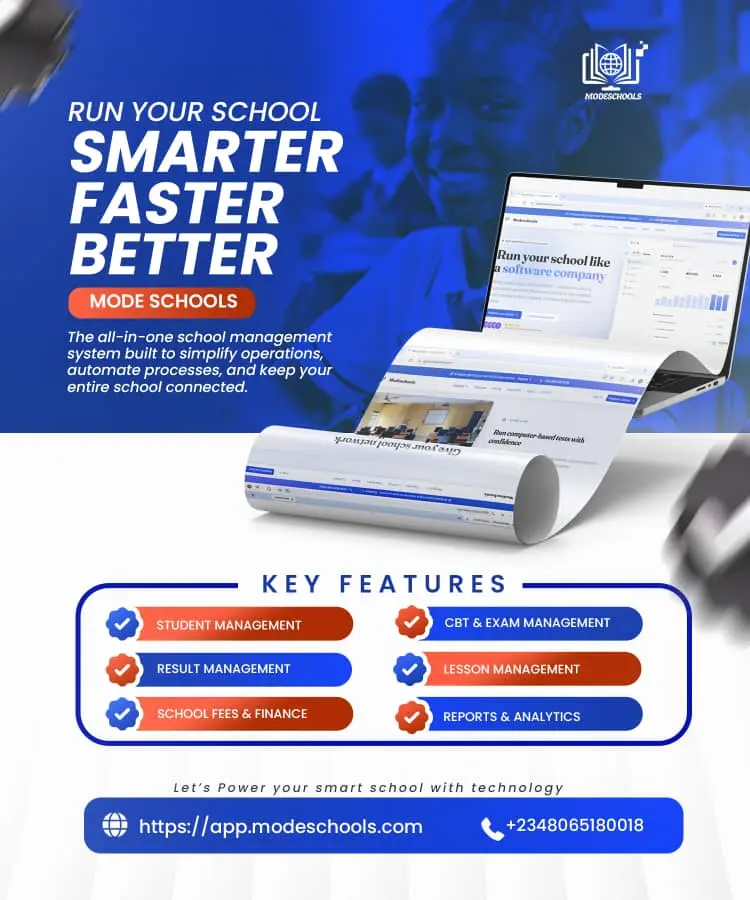
Running a school is a balancing act. Between tracking attendance, managing fees, reviewing lesson plans, and keeping parents in the loop, school administrators and teachers often find themselves buried under mountains of paperwork.

At MODE Digital Creations Limited, we believe technology should do the heavy lifting so you can focus on what matters most: education.

That is why we are thrilled to introduce Modebills—a comprehensive, next-generation school management system designed to streamline every aspect of your institution’s daily operations.

Revolutionizing School Assessments

What sets Modebills apart is its robust, built-in examination engine. Say goodbye to fragmented external platforms. With Modebills, schools can seamlessly create, schedule, and administer internal exams and tests directly within the system, making grading and performance tracking smoother than ever.

Key Features At A Glance

Modebills bridges the gap between administrators, teachers, students, and parents with tailored portals:

  • Comprehensive School Admin Portal: The central nervous system of your school. Effortlessly manage school affairs, track student attendance, and handle fee collections with transparent, automated billing.
  • Logistics & Operations Hub: Seamlessly allocate and monitor hostel accommodations and school bus routes to ensure student safety and logistical efficiency.
  • Teacher Empowerment Tools: Teachers can draft, submit, and manage lesson plans, track course delivery milestones, and manage classroom data all in one place.
  • Real-Time Parent Dashboard: Keep parents actively involved in their child’s academic journey. Parents get instant access to grades, exam results, fee statements, and performance insights.

Why Choose Modebills?

Efficiency Meets Innovation. Modebills isn’t just a tool; it’s an ecosystem that reduces administrative burnout, improves parent satisfaction, and gives educators their time back.

Ready to transform your school’s digital infrastructure?

Let’s build the future of education together.

Contact MODE Digital Creations Limited today on +2348065180018 to schedule a free demo!

#EdTech #SchoolManagement #DigitalTransformation #Modebills #MODEDigitalCreations #EducationInnovation


Discover more from Daily Media NG

Subscribe to get the latest posts sent to your email.

Continue Reading

Education

Igniting Futures: The ModeCodersClub Story

Published

on

Igniting Futures: The ModeCodersClub Story

Igniting Futures: The ModeCodersClub Story

In the heart of Nigeria’s Niger Delta, where rivers wind through resilient communities and dreams often compete with limited opportunities, a bold vision took root. It began not with grand funding or flashy technology, but with a deep, unwavering conviction held by a small team at MODE Digital Creations Limited, led by founder and MD/CEO Davids Ogan.

When they launched ModeCodersClub, they had one singular thing in mind: to democratise digital skills training for school-age children. They believed, with every fibre of their being, that every child from the Niger Delta—and by extension, across Nigeria—deserves a better education and a brighter future. Not just any future, but one where they could code, create, innovate, and compete on their own terms, no matter their background or postcode.

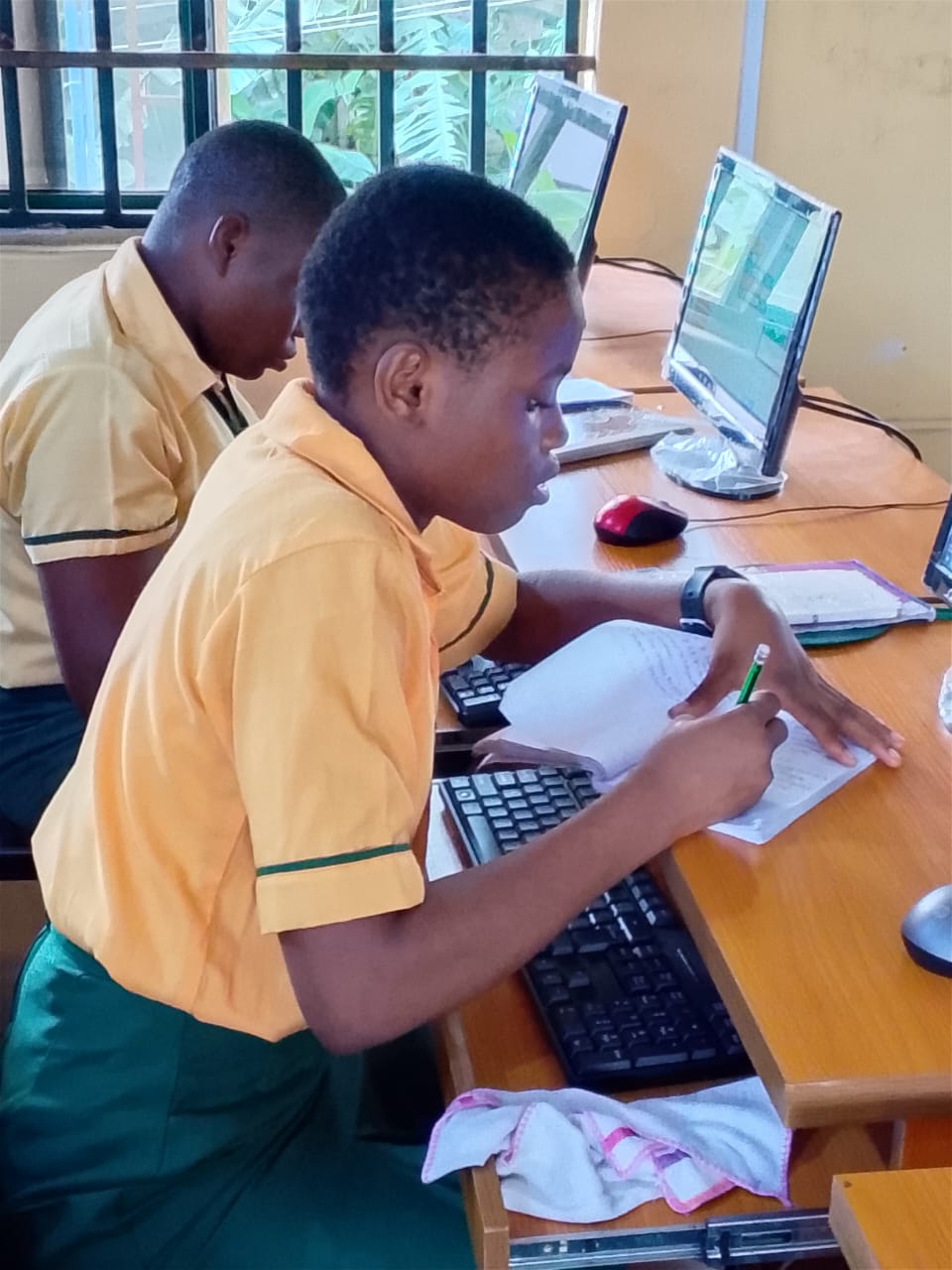
Those early months were filled with determination and quiet hustle. The team crafted a structured, curriculum-aligned programme focused on programming fundamentals, computational thinking, and web development basics—skills designed to spark curiosity and build real problem-solving abilities. They piloted in select private and community schools, adapting lessons for classrooms with shared devices, inconsistent power, and students who had never touched a keyboard before. 

The magic happened in the small moments: a young girl’s face lighting up when her first lines of code made a simple animation dance across the screen; a group of boys high-fiving after debugging their first mini-project together; teachers noticing sharper focus and greater confidence spilling into maths and science classes. What started as after-school or enrichment sessions quickly revealed something powerful—children in the Niger Delta were not just capable of learning to code; they were hungry for it.

Word spread. Classrooms buzzed with energy. Parents began asking how their children could join. Schools that once viewed technology as distant or optional started seeing it as essential. What began as a passionate experiment grew into a movement of joy and excitement. Today, ModeCodersClub runs in over 25 schools and counting across the Niger Delta, touching the lives of hundreds of young learners who now see themselves as future technologists, innovators, and problem-solvers.

The breakthrough moment arrived on 30 April 2026 in Port Harcourt. In a landmark ceremony, MODE Digital Creations Limited signed a Memorandum of Understanding (MOU) with the Rivers State Universal Basic Education Board (RSUBEB). This formal partnership paves the way for ModeCodersClub to be rolled out systematically into government primary and junior secondary schools across Rivers State—beginning with a pilot phase and scaling to reach thousands more children.

Under the agreement, ModeCodersClub provides the ready-to-deploy curriculum, trained facilitators, and flexible digital resources (designed to work even in low-bandwidth or offline settings). RSUBEB ensures access to schools, protected instructional time, and institutional support. It is the first major step in integrating structured coding education into the public basic education system in the state.

Davids Ogan captured the spirit perfectly: 

 “This partnership is not simply about teaching children to write code — it is about equipping the next generation of Niger Delta innovators with the tools they need to build solutions for their communities and compete on the global stage. We started ModeCodersClub because we believed deeply that where a child grows up should not determine whether they can learn to code. Formalising this into the public school system through RSUBEB is the breakthrough we have been working towards.”

Dr Dumani, Director of Teachers Training at RSUBEB, added:  

“Digital skills are no longer optional — they are fundamental. Our collaboration with MODE Digital Creations is a bold step in fulfilling that mandate.”

This MOU also carries the weight of broader endorsement from Rivers State’s education leadership, signalling that digital literacy is now a recognised priority for the state’s children.

Yet even with this hard-won momentum, the work is only beginning. The team’s long-term ambition is ambitious and necessary: to bring ModeCodersClub to 1,000 primary and secondary schools across the Niger Delta within five years. Every new school means more children discovering that they can shape technology instead of merely consuming it. Every new facilitator trained means more sustainable impact. Every device placed in a classroom multiplies opportunity.

This is where you come in.

ModeCodersClub is now actively seeking spirited individuals, organisations, corporate partners, philanthropists, and friends of education to help scale this transformative work. Your support can directly equip the next generation with the digital skills they need to thrive:

– Sponsor devices, learning kits, or offline-capable resources for additional classrooms  

– Fund facilitator training and programme expansion into new local government areas  

– Support scholarships or advanced tracks for standout young coders  

– Partner through CSR initiatives (especially valuable for organisations with roots in the Niger Delta)  

– Volunteer expertise, mentorship, or advocacy

Whether you contribute financially, in-kind, or through connections, you become part of a story that is already rewriting what is possible for children in the region.

The journey of ModeCodersClub is living proof that when vision meets persistence—and when institutions and communities come together—real, lasting change happens. From one powerful idea to over 25 schools, a landmark government MOU, and thousands of young minds awakening to their potential, this is more than a programme. It is a movement of hope, skills, and opportunity.

Every child in the Niger Delta deserves the chance to code their own future.  

Join us in making that future possible. 

Visit https://modecodersclub.com.ng or call +2348065180018 to learn more, explore ways to support, or connect with the team. Together, we can turn today’s spark into tomorrow’s bright, inclusive digital Nigeria.  

The story continues—and the best chapters are still being written by the children themselves.


Discover more from Daily Media NG

Subscribe to get the latest posts sent to your email.

Continue Reading
Advertisement
August 2026
M T W T F S S
 12
3456789
10111213141516
17181920212223
24252627282930
31  

Trending

Discover more from Daily Media NG

Subscribe now to keep reading and get access to the full archive.

Continue reading