
People
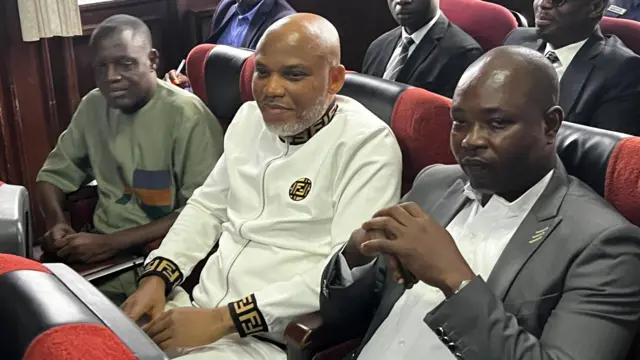
Nnamdi Kanu Case: Court’s Admission of Evidence Shakes Nigeria’s Legal Landscape

Post Links
A Pivotal Moment in the Nnamdi Kanu Case
The ongoing trial of Nnamdi Kanu, the leader of the Indigenous People of Biafra (IPOB), has been a lightning rod for controversy in Nigeria. Recently, a significant development occurred when a Federal High Court in Abuja admitted new evidence against Kanu, a move that has sparked heated debates about the future of his case and the broader implications for Nigeria’s judicial and political systems. This blog post delves into the details of this court admission, what it means for Kanu’s legal battle, and the potential consequences for his release from prison. We will explore the context of the case, the nature of the admitted evidence, and the ripple effects this could have on Nigeria’s southeast region and beyond.
UK Tiktok Creation Blueprint with Monetization tips and Coaching – How to create a U.K. tiktok account

Background: Who is Nnamdi Kanu and Why is His Case Significant?
Nnamdi Kanu, a British-Nigerian activist, founded IPOB in 2012 to advocate for the secession of Nigeria’s southeastern region to form an independent Biafran state. His activism, primarily through Radio Biafra, has made him a polarizing figure. Kanu was first arrested in 2015 on charges including treason and terrorism, sparking a legal saga that has seen multiple court rulings, bail disputes, and allegations of human rights violations. After fleeing Nigeria in 2017 following a military raid on his home, Kanu was controversially extradited from Kenya in 2021, an action courts later deemed illegal.
Currently detained by the Department of State Services (DSS), Kanu faces a seven-count charge related to terrorism, incitement, and illegal possession of broadcast equipment. The case is not just a legal matter but a political flashpoint, with Kanu’s supporters arguing that his detention is a form of persecution for his Biafran advocacy, while the Nigerian government insists he poses a national security threat. The recent court admission of evidence has brought renewed attention to the case, raising questions about its trajectory and Kanu’s prospects for release.
The Court’s Admission of Evidence: What Happened?
On May 7, 2025, reports emerged that the Federal High Court in Abuja admitted new evidence in Kanu’s trial, a development that has been described as a critical juncture. According to posts on X, the court accepted evidence presented by the prosecution, though specifics about the nature of this evidence remain limited. Earlier court sessions, such as one on April 30, 2025, provided context: a DSS witness testified about Kanu’s arrest in 2015, revealing that no weapons or “instruments of terrorism” were found in his possession, despite the terrorism charges. The same witness admitted that an analysis of Kanu’s phone was conducted but not submitted to the court, as it was deemed irrelevant.

Additionally, the prosecution has alleged that Kanu used Radio Biafra to incite violence, including attacks on security operatives and government facilities. These claims form the backbone of the seven charges, which include spreading inciting messages, importing a radio transmitter, and instructing IPOB members to disrupt elections. The court’s decision to admit evidence, potentially including video or audio recordings of Kanu’s broadcasts, could strengthen the prosecution’s case by providing tangible proof of incitement, even as the defense argues that no direct link to violence has been established.
What Does the Admission of Evidence Mean for Kanu’s Case?
The admission of evidence is a double-edged sword in the Nnamdi Kanu case. Here is a breakdown of its implications:
- Strengthening the Prosecution’s Narrative: The Nigerian government has long argued that Kanu’s broadcasts incited violence and destabilized the southeast. If the admitted evidence includes clear examples of Kanu encouraging violent acts, it could bolster the terrorism charges. The prosecution has previously pointed to Kanu’s alleged calls for attacks on police and government property, as well as his role in founding the Eastern Security Network, an armed wing of IPOB. However, the defense has consistently challenged the credibility of such claims, noting that no individual has been directly linked to Kanu’s orders in court.
- Challenging the Defense’s Position: Kanu’s legal team, led by prominent lawyers like Kanu Agabi, has argued that the charges are baseless and politically motivated. They have highlighted procedural irregularities, such as Kanu’s illegal extradition and the lack of concrete evidence tying him to specific acts of violence. The admission of evidence could force the defense to pivot, focusing on discrediting the new material or arguing that it falls short of proving terrorism. For instance, the defense has previously questioned why no weapons were found during Kanu’s arrest, undermining the narrative of him as a terrorist.
- Judicial Scrutiny and Fairness: The court’s handling of the evidence will be under intense scrutiny. Past rulings, such as the 2022 Appeal Court decision that dropped all charges against Kanu due to his illegal extradition, only for the Supreme Court to reinstate the trial in 2023, have raised questions about judicial independence. The admission of evidence must adhere to legal standards, with the defense having access to review and challenge it. Any perception of bias could fuel public unrest, particularly in the southeast, where Kanu enjoys significant support.
- Impact on Bail Applications: Kanu has repeatedly sought bail, citing health concerns and the need for better access to his legal team. The court’s admission of evidence could complicate these efforts, as it may reinforce the government’s argument that Kanu is a flight risk or a threat to national security. In 2022, a bail application was denied because Kanu had previously fled Nigeria, a point the prosecution continues to emphasize.
Implications for Nnamdi Kanu’s Release from Prison
The question of whether Kanu will be released from prison hinges on several factors influenced by the recent court developments:
- Legal Outcome of the Trial: If the admitted evidence significantly strengthens the prosecution’s case, Kanu could face a prolonged trial and potential conviction, keeping him in DSS custody. Conversely, if the defense successfully discredits the evidence or highlights procedural flaws, Kanu’s chances of acquittal or a political resolution increase. The reassignment of the case to a new judge in March 2025, following Kanu’s accusations of bias against Justice Binta Nyako, could also play a role in ensuring a fairer trial, potentially favoring Kanu’s release.
- Political Pressure and Public Sentiment: Kanu’s detention has been a rallying point for IPOB supporters and a source of unrest in the southeast. Calls for his release have come from prominent figures, including the South-East Governors and Peter Obi, who argue that freeing Kanu could de-escalate tensions and foster dialogue. The admission of evidence may intensify these calls if it’s perceived as weak or politically motivated, putting pressure on the government to seek a non-judicial solution.
- International Attention: Kanu’s British citizenship and the UN’s 2022 call for his release due to his illegal rendition have kept the case in the global spotlight. The court’s handling of the evidence could prompt further international scrutiny, particularly if human rights violations are alleged. This could push the Nigerian government to consider releasing Kanu to avoid diplomatic fallout.
- Regional Stability: The southeast has seen increased violence linked to IPOB and its offshoots, with the government attributing much of it to Kanu’s influence. Releasing him could either calm tensions by addressing a key grievance or embolden separatist activities, depending on the terms of his release. The government’s fear of Kanu inciting further unrest, as articulated by former Attorney-General Abubakar Malami, remains a significant barrier.
Broader Implications for Nigeria
The Nnamdi Kanu case transcends the courtroom, touching on issues of free speech, self-determination, and Nigeria’s unity. The admission of evidence could set a precedent for how the judiciary handles politically charged cases, particularly those involving separatist movements. A conviction based on robust evidence might deter other agitators but risks alienating the southeast further. Conversely, an acquittal or release could embolden IPOB while signaling judicial independence.
The case also highlights Nigeria’s struggle to balance security concerns with human rights. Kanu’s prolonged detention, often in solitary confinement, has drawn criticism from human rights groups, and the court’s next steps will be closely watched. Moreover, the trial’s outcome could influence the 2027 elections, as Kanu’s supporters remain a potent political force in the southeast.
Conclusion: A Case at a Crossroads
The recent court admission of evidence in the Nnamdi Kanu case marks a critical turning point. While it strengthens the prosecution’s hand, it also places the judiciary under a microscope, with the defense poised to challenge the evidence’s validity. For Kanu, the stakes are high: the outcome will determine whether he remains in prison or regains his freedom, either through legal victory or political negotiation. For Nigeria, the case is a test of its commitment to justice, unity, and stability.
As the trial progresses, the world watches to see whether the court will uphold the rule of law or succumb to political pressures. Kanu’s fate, intertwined with the aspirations of millions in the southeast, hangs in the balance. Stay tuned for updates as this landmark case unfolds.
Discover more from Daily Media NG
Subscribe to get the latest posts sent to your email.

People
Breaking News: Youths Burn NDLEA Office and Storm Emir’s Palace in Kwara Over Rising Insecurity

In a dramatic escalation of frustration, youths in Lafiagi, a town in Kwara State, Nigeria, have taken to the streets, burning down the National Drug Law Enforcement Agency (NDLEA) office and invading the Emir’s palace. This unrest, unfolding on Monday, June 30, 2025, stems from growing anger over rampant abductions and a perceived lack of action from local authorities. The incident highlights a deepening crisis of insecurity that has gripped the region, with recent reports pointing to the kidnapping of a popular Point of Sale (POS) agent and other residents. As communities reel from these events, the question arises: what has driven this outburst, and what does it mean for the future of Kwara State?
The Spark Behind the Protests
The trouble began with the abduction of a well-known POS agent, identified as Yman, who was taken from Lafiagi town on Sunday night. Just hours later, two Hausa men were seized during a violent raid on the nearby Kokodo village. These incidents, part of a wave of kidnappings reported over the past weeks, have left families in despair and communities on edge. According to details shared by SaharaReporters, the enraged youths, tired of government silence, stormed the streets early Monday morning, demanding an end to the bloodshed and abductions.
Videos and photos circulating online show the extent of the damage, with the NDLEA office reduced to ashes and parts of the Emir’s palace vandalized. A resident spoke to SaharaReporters, voicing the collective frustration: people no longer sleep soundly, and despite repeated pleas, neither the governor nor local leaders have provided tangible solutions. This bottled-up anger, fueled by a series of terrorist attacks, has now boiled over into public protest.
A Region Under Siege
Kwara State, once seen as a relatively peaceful part of northern Nigeria, has recently become a hotspot for insecurity. The abductions in Lafiagi are not isolated incidents but part of a broader trend. Data from the Nigerian Watch database reveals a staggering 35 percent increase in kidnapping cases across northern Nigeria over the past year, with Kwara experiencing a noticeable uptick. The involvement of suspected Fulani bandits, who reportedly used motorcycles and superior firepower to overpower local vigilantes, adds to the complexity of the situation.
The kidnapping of a prominent agro-chemical dealer, Alhaji Chemical, just a day before the protests, further underscores the boldness of these attacks. Eyewitnesses described how heavily armed men stormed his residence in the Taiwo area, leaving the community in shock. With many victims still in captivity and families forced to pay hefty ransoms, the sense of helplessness is palpable.
The Role of Local Leadership
The invasion of the Emir’s palace signals a breakdown in trust between the community and its traditional rulers. The Emirate of Lafiagi, under new leadership since 2021, had aimed to foster development and attract investment, as noted in a detailed analysis by PRNigeria. However, the current wave of insecurity threatens to undo these efforts. Residents’ complaints suggest that neither the Emir nor local government officials have effectively addressed the rising tide of violence, leaving youths to take matters into their own hands.
This unrest also raises questions about the effectiveness of security agencies like the NDLEA. The agency, which recently celebrated progress in combating drug abuse in Kwara (as reported by AIT Live), now finds its office targeted, reflecting public disillusionment with its broader role in maintaining safety.
The Wider Context of Insecurity
The situation in Kwara mirrors a troubling pattern across Nigeria’s northern states. Neighboring regions like Niger and Kogi have reported significant loss of life due to armed gangs, as highlighted in a 2022 Guardian Nigeria article. The spread of insecurity, likened to a cancer that requires swift action, has now reached Kwara, with historical precedents like the 2014 Chibok schoolgirls kidnapping (detailed on Wikipedia) serving as a stark reminder of the challenges ahead. The recurring theme of banditry and abductions, often mischaracterized as isolated incidents, points to a deeper systemic issue that demands urgent attention.
Looking Ahead: What is Next for Kwara?
As the dust settles in Lafiagi, the focus shifts to how authorities will respond. The involvement of vigilantes and security operatives in rescue efforts offers a glimmer of hope, but without a coordinated strategy, the cycle of violence may continue. The protests serve as a wake-up call for the Kwara State government and national leaders to prioritize security and rebuild community trust.
UK Tiktok Creation Blueprint with Monetization tips and Coaching – How to create a U.K. tiktok account
For now, the people of Lafiagi wait anxiously, hoping for the safe return of their loved ones and an end to the terror that has disrupted their lives. The burning of the NDLEA office and the storming of the Emir’s palace may be just the beginning unless decisive action is taken.
Conclusion
The events in Kwara State on June 30, 2025, paint a troubling picture of a community pushed to its limits by rising insecurity. The abduction of residents, the destruction of public property, and the targeting of traditional leadership reflect a society in crisis. As Nigeria grapples with these challenges, the international community and local stakeholders must work together to address the root causes and restore peace. The future of Lafiagi and indeed Kwara State hangs in the balance.
Discover more from Daily Media NG
Subscribe to get the latest posts sent to your email.

On June 23, 2025, a significant event unfolded in Taraba State, Nigeria, as the Nigerian Army brokered a peace accord between the Fulani and Tiv communities. Held at the 6 Brigade Headquarters in Jalingo, this initiative marks a shift toward non-kinetic conflict resolution, prioritizing dialogue over military force. With a history of ethnic clashes claiming hundreds of lives, this peace accord offers hope for lasting harmony in a region long plagued by violence. This article explores the details of this groundbreaking agreement, its implications, and the challenges ahead for sustainable peace in Taraba State.
The Background of Fulani-Tiv Conflict
The Fulani and Tiv communities in Taraba State have endured decades of tension, rooted in disputes over land, cattle grazing routes, and cultural differences. According to the Uppsala Conflict Data Program, over 200 conflict-related deaths have been recorded in Taraba since 2010, highlighting the severity of these clashes. Historically, such conflicts have been met with military interventions, often escalating rather than resolving the issues. The recent peace accord, facilitated by Brigadier General Kingsley Chidiebere Uwa of the 6 Brigade, represents a bold departure from this approach, focusing instead on bringing community leaders together to negotiate a truce.
This event took place against a backdrop of rising tensions, with longstanding disputes threatening to erupt into further violence. The involvement of local government officials, traditional rulers, and security representatives underscores the collaborative effort to address these deep-seated issues.
Details of the Peace Accord
The peace dialogue, convened on Monday, June 23, 2025, brought together key stakeholders, including the Chairman of Gassol Local Government Area, Hon. Abubakar Usman, and community elders. Brigadier General Uwa emphasized the importance of peace, stating that no society can thrive without it. He urged the communities to support security agencies with actionable intelligence and to avoid taking justice into their own hands, reinforcing the state’s constitutional authority.
After hours of discussion, the Fulani and Tiv representatives agreed to:
- Maintain open communication
- Refrain from shielding criminal elements
- Work with authorities to prevent future conflicts
The meeting culminated in the formal signing of the peace accord, a symbolic step toward rebuilding trust. Hon. Usman praised the Nigerian Army’s dedication, calling the initiative a vital turning point for Gassol Local Government Area.
The Non-Kinetic Approach: A New Strategy
The Nigerian Army’s adoption of a non-kinetic strategy relies on dialogue and community engagement rather than military action. This aligns with broader trends in African peacebuilding. The African Union’s African Peace and Security Architecture, established in 2002, promotes such methods to address continental security challenges. This approach contrasts with past interventions, such as the 2019 Zamfara peace pact, which failed due to lack of local government support and enforcement.
By focusing on reconciliation, the Taraba peace accord mirrors traditional conflict resolution methods, like those used in the Kom community of Cameroon, where emphasis is placed on restoring social harmony rather than punishment. However, this strategy raises questions about accountability, as no specific measures were outlined to address past perpetrators, a critical factor in ensuring long-term success.
Challenges and Prospects for Peace
While the peace accord is a promising development, its success hinges on several factors:
- Historical Precedents: Past agreements have often broken down, suggesting that sustained commitment from both communities and enforcement by authorities will be essential.
- Lack of a Clear Justice Mechanism: This could undermine trust, particularly among victims seeking redress for past losses.
On the positive side, the involvement of local leaders and the army’s ongoing support offer a strong foundation. The initiative’s timing, amid heightened tensions, indicates a proactive effort to prevent further escalation. If supported by economic development and community programs, this accord could pave the way for a more stable Taraba State.
UK Tiktok Creation Blueprint with Monetization tips and Coaching – How to create a U.K. tiktok account
Conclusion
The peace accord between the Fulani and Tiv communities in Taraba State marks a historic moment in Nigeria’s approach to ethnic conflicts. Facilitated by the Nigerian Army’s 6 Brigade, this non-kinetic strategy highlights the power of dialogue in resolving deep-rooted disputes. While challenges remain, particularly around justice and enforcement, the commitment of local leaders and the military provides a glimmer of hope. As Taraba moves forward, the success of this peace accord could serve as a model for other conflict zones across Nigeria and beyond.
Discover more from Daily Media NG
Subscribe to get the latest posts sent to your email.

The Nigerian Police Force, a critical pillar of the nation’s security with over 300,000 personnel, is on the brink of a historic move. Officers have issued a bold ultimatum to the government, threatening a nationwide strike if their demands for pension reform are not met by the end of July 2025. At the heart of this unrest is dissatisfaction with the Contributory Pension Scheme (CPS), introduced in 2004, which officers describe as inadequate.
They are pushing for a switch to the Defined Benefits Scheme, a model already in place for the military and agencies like the Economic and Financial Crimes Commission (EFCC). As the deadline approaches, the potential for a nationwide strike looms large, raising concerns about its impact on national security and the broader economy.
UK Tiktok Creation Blueprint with Monetization tips and Coaching – How to create a U.K. tiktok account
The Root of the Discontent: The Contributory Pension Scheme
The Contributory Pension Scheme, established under the 2004 Pension Reform Act, replaced the older Defined Benefits Scheme. Under this system, both employers and employees contribute to a Retirement Savings Account managed by private Pension Fund Administrators.
The goal was to create a more sustainable pension framework. However, many Nigerian Police officers argue that it leaves them financially vulnerable after retirement. Unlike the Defined Benefits Scheme, which guarantees a fixed pension based on years of service and salary, the CPS depends on market performance and contributions, offering less predictability.
Efforts to address these concerns gained traction in 2022 and 2023, with legislative proposals aiming to exempt the police from the CPS. Despite this momentum, no substantial changes have been implemented. The frustration has now boiled over, with officers publicly calling for urgent action from President Tinubu’s administration.
Economic Pressures Fueling the Crisis
The timing of this nationwide strike threat coincides with ongoing economic challenges in Nigeria. The removal of the fuel subsidy in 2023, a decision made under President Tinubu’s leadership, aimed to redirect savings into other sectors. However, reports suggest that these funds have not been effectively channeled into social programs or welfare support for public servants, including the police. This economic strain has likely amplified the officers’ grievances, as rising living costs make the current pension scheme even less viable.
Without clear data on how the subsidy savings have been allocated, the government faces growing pressure to address the financial insecurities faced by its security forces. The Nigerian Police, already stretched thin by rising insecurity across various regions, now find themselves at a crossroads, balancing their duty to protect the nation with their own economic survival.
A Potential Security Crisis on the Horizon
A nationwide strike by the Nigerian Police could have far-reaching consequences. With over 300,000 personnel, the force is the largest security agency in the country, playing a vital role in maintaining order amid increasing regional instability. A shutdown of police operations, as threatened, could exacerbate existing security challenges, leaving communities vulnerable.
The officers’ ultimatum includes a stark warning: any colleague found working during the potential strike, set to begin on August 1, 2025, may face severe repercussions. This escalation underscores the depth of their frustration and the seriousness of their intent. As of now, neither the presidency nor the Ministry of Police Affairs has issued an official response, leaving the situation unresolved as the July deadline draws closer.
What Lies Ahead for Pension Reform and National Stability
The Nigerian Police’s demand for a shift to the Defined Benefits Scheme reflects a broader call for fairness and security in retirement planning. This issue extends beyond the police, potentially influencing other public sector workers under the CPS. For the Tinubu administration, addressing this crisis requires more than just promises—it demands actionable pension reform and transparent economic policies.
As tension builds within police ranks, the coming weeks will be critical. Will the government act to avert a nationwide strike and safeguard national security? Or will inaction lead to a breakdown in law enforcement that could destabilize the nation? The outcome of this standoff will shape the future of Nigeria’s security forces and the welfare of its officers for years to come.
For now, all eyes are on Abuja, where decisions made—or delayed—could determine whether the Nigerian Police remain a force for stability or a trigger for chaos.
Discover more from Daily Media NG
Subscribe to get the latest posts sent to your email.


Business3 months ago
Social Media + Website: How Nigerian Small Businesses Use Both Together to Win More Customers

Education3 months ago
Introducing Modebills: The Ultimate All-in-One School Management Ecosystem

Education4 months ago
Igniting Futures: The ModeCodersClub Story

Business4 months ago
How a Website Helped My Niger Delta Business Attract Corporate Clients in Nigeria

Business4 months ago
Why Nigerian Businesses Are Losing Customers Without a Website — And How to Fix It

Education4 months ago
The Transforming Power of Education: Digital Education Transformation in the Niger Delta and Beyond

Career3 days ago
From Oil Fields to Mind Fields: How Digital Skills Initiatives Can Power Nigeria’s Next Economy
Business3 weeks ago
Digital Skills and Entrepreneurship: The Twin Engines Africa Needs

Business3 months ago
Akara Won’t Build Nigeria’s Future

Entertainment7 years ago
GOTV Customer Care Line, Emails, Whatsapp, Phone numbers, Website

Business6 years ago
How to Start Charcoal Export business in Nigeria

Entertainment7 years ago
