Education
JAMB 2025 Results Reveal Mass Failure: What It Means for Nigeria’s Education Quality
Post Links
A Wake-Up Call for Nigeria’s Education System
The release of the JAMB 2025 results has sent shockwaves across Nigeria, with over 75% of candidates—approximately 1.5 million out of 1.95 million—scoring below 200 out of 400. This staggering mass failure has sparked widespread concern about the state of education quality in the country. The Joint Admissions and Matriculation Board (JAMB) examination, a critical gateway to tertiary education, serves as a benchmark for assessing academic performance among Nigerian students.
The alarming failure rate in the JAMB 2025 results raises critical questions about systemic issues in the education sector and their long-term implications for the nation’s future. This blog post explores the reasons behind the mass failure, its impact on education quality, and actionable steps to address this crisis.
Understanding the JAMB 2025 Results
The JAMB 2025 results paint a grim picture of academic performance. According to posts on X, only about 33% of candidates achieved a score of 200 or above, the typical minimum requirement for university admission. With 1.5 million students falling short, the failure rate is unprecedented and signals a deeper crisis. The JAMB examination tests proficiency in subjects like English, Mathematics, and other core areas, serving as a standardized measure of readiness for higher education. When over three-quarters of Nigerian students fail to meet this threshold, it is clear that the education system is struggling to prepare students effectively.
The mass failure in JAMB 2025 results isn’t just a statistic—it is a reflection of systemic challenges that have been brewing for years. From outdated curricula to inadequate teacher training, the factors contributing to this outcome are complex and multifaceted. Let’s dive into the key issues driving this crisis and what they reveal about education quality in Nigeria.
Why Are So Many Students Failing? Unpacking the Causes
- Outdated Curriculum and Misaligned Teaching
One of the most significant contributors to the mass failure in JAMB 2025 results is the disconnect between what is taught in schools and what JAMB tests. As noted in posts on X, there is a clear gap between secondary school curricula and the skills required to excel in the examination. Many schools rely on outdated teaching materials that fail to address the critical thinking, problem-solving, and analytical skills JAMB emphasizes. This misalignment leaves Nigerian students unprepared for the rigors of the exam, undermining their academic performance. - Underfunded Education System
Nigeria’s education sector has long been plagued by underfunding. Public schools often lack basic infrastructure, such as libraries, laboratories, and digital learning tools, which are essential for fostering education quality. Teachers, who are pivotal to student success, are frequently underpaid and demotivated, leading to low morale and ineffective teaching. Without adequate resources, schools struggle to deliver the standard of education needed to boost academic performance in exams like JAMB. - Societal Pressures and Distractions
The rise of social media and the pursuit of instant fame have shifted the priorities of many Nigerian students. As highlighted in X posts, distractions like TikTok, online trends, and societal pressures to pursue quick wealth through non-academic means are diverting attention from studies. This cultural shift has diluted the value placed on education, contributing to the mass failure seen in JAMB 2025 results. - Inadequate Preparation and Exam Anxiety
Many students lack access to quality preparatory resources, such as mock exams, study guides, or tutoring. Additionally, the high-stakes nature of JAMB creates immense pressure, leading to exam anxiety that can impair performance. Without proper guidance and support, Nigerian students are left to navigate these challenges alone, further impacting their academic performance. - Teacher Quality and Training
The quality of teaching directly influences education quality. Many educators in Nigeria lack access to professional development opportunities, limiting their ability to adopt modern teaching methods. This gap in teacher training translates to poorly equipped students, who struggle to meet the demands of standardized exams like JAMB.
UK Tiktok Creation Blueprint with Monetization tips and Coaching – How to create a U.K. tiktok account

Implications of Mass Failure on Education Quality
The mass failure in JAMB 2025 results has far-reaching implications for Nigeria’s education system and society at large. Here are some critical consequences:
- Erosion of Confidence in the Education System
When over 75% of candidates fail a national examination, it erodes public trust in the education system. Parents, students, and stakeholders may question the value of investing in education if the outcomes are consistently poor. This loss of confidence can lead to reduced enrollment in formal education and a preference for alternative paths, further weakening education quality. - Limited Access to Tertiary Education
Scoring below 200 significantly reduces a student’s chances of gaining admission to universities, polytechnics, or colleges. With only 33% of candidates meeting the threshold, the majority of Nigerian students face delayed or denied access to higher education. This bottleneck limits the production of skilled professionals, hindering national development. - Widening Inequality
The mass failure disproportionately affects students from disadvantaged backgrounds who attend under-resourced schools. Wealthier families can afford private tutoring or better schools, giving their children an edge. This disparity exacerbates educational inequality, perpetuating a cycle of poverty and limited opportunities for many Nigerian students. - Economic and Social Consequences
A poorly educated workforce undermines Nigeria’s economic growth and global competitiveness. The mass failure in JAMB 2025 results signals a potential shortage of qualified graduates in critical fields like medicine, engineering, and technology. Additionally, uneducated youth are more vulnerable to social vices, such as crime and unrest, posing a threat to national stability. - Global Reputation
Nigeria’s education quality is under scrutiny on the global stage. The alarming JAMB 2025 results could deter international institutions from recognizing Nigerian qualifications, limiting opportunities for students seeking to study or work abroad. This tarnished reputation could have long-term consequences for the country’s global standing.
Solutions to Address the Crisis
The mass failure in JAMB 2025 results is a call to action for all stakeholders—government, educators, parents, and students. Here are actionable steps to improve education quality and academic performance:
- Revamp the Curriculum
The government must align secondary school curricula with JAMB’s requirements, emphasizing critical thinking, problem-solving, and practical skills. Regular updates to teaching materials and assessments will ensure Nigerian students are well-prepared for standardized exams. - Invest in Education Infrastructure
Increased funding for schools is essential to provide modern facilities, digital tools, and learning resources. Equipping classrooms with technology and ensuring access to libraries and labs will enhance education quality and support academic performance. - Enhance Teacher Training
Continuous professional development for teachers is critical. Programs that focus on modern teaching methods, classroom management, and subject mastery will empower educators to deliver high-quality instruction, directly impacting JAMB 2025 results in future years. - Promote Parental and Community Involvement
Parents and communities must prioritize education over societal distractions. Awareness campaigns can highlight the importance of academic success and encourage families to support their children’s studies. Community-based study groups and mentorship programs can also boost academic performance. - Leverage Technology for Exam Preparation
Digital platforms and AI-driven tools can provide affordable, accessible study resources for Nigerian students. Online mock exams, video tutorials, and interactive learning apps can help students prepare effectively for JAMB, reducing the likelihood of mass failure. - Address Exam Anxiety
Schools should implement programs to help students manage stress and build confidence. Workshops on exam strategies, time management, and mental health support can mitigate anxiety and improve academic performance.
Conclusion: A Collective Responsibility
The JAMB 2025 results, with over 1.5 million students scoring below 200, are a stark reminder of the challenges facing Nigeria’s education system. The mass failure underscores the urgent need to address systemic issues, from outdated curricula to underfunded schools, to restore education quality. By investing in infrastructure, enhancing teacher training, and leveraging technology, Nigeria can empower its students to excel academically and secure a brighter future.
The implications of this crisis extend beyond individual students to the nation’s economic and social fabric. Stakeholders must act swiftly to reverse this trend, ensuring that Nigerian students are equipped with the skills and knowledge to thrive in a competitive world. The JAMB 2025 results are not just a statistic—they are a clarion call for reform. Let’s work together to transform education quality and unlock the potential of Nigeria’s youth.
Discover more from Daily Media NG
Subscribe to get the latest posts sent to your email.

Education
Introducing Modebills: The Ultimate All-in-One School Management Ecosystem
Post Links
Introducing Modebills: The Ultimate All-in-One School Management Ecosystem
Running a school is a balancing act. Between tracking attendance, managing fees, reviewing lesson plans, and keeping parents in the loop, school administrators and teachers often find themselves buried under mountains of paperwork.
At MODE Digital Creations Limited, we believe technology should do the heavy lifting so you can focus on what matters most: education.
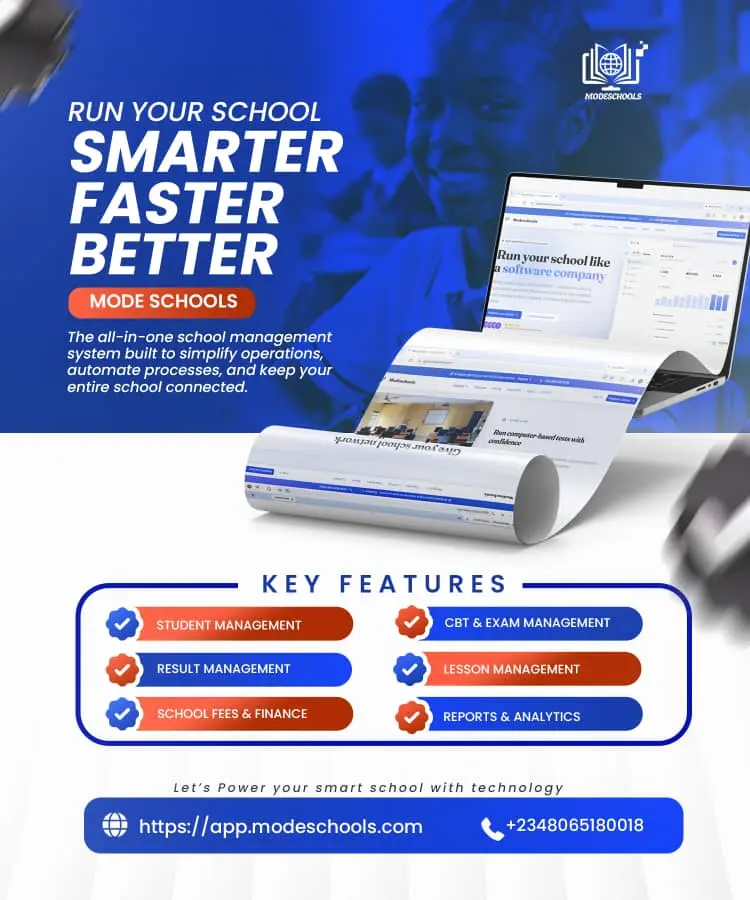
That is why we are thrilled to introduce Modebills—a comprehensive, next-generation school management system designed to streamline every aspect of your institution’s daily operations.
Revolutionizing School Assessments
What sets Modebills apart is its robust, built-in examination engine. Say goodbye to fragmented external platforms. With Modebills, schools can seamlessly create, schedule, and administer internal exams and tests directly within the system, making grading and performance tracking smoother than ever.
Key Features At A Glance
Modebills bridges the gap between administrators, teachers, students, and parents with tailored portals:
- Comprehensive School Admin Portal: The central nervous system of your school. Effortlessly manage school affairs, track student attendance, and handle fee collections with transparent, automated billing.
- Logistics & Operations Hub: Seamlessly allocate and monitor hostel accommodations and school bus routes to ensure student safety and logistical efficiency.
- Teacher Empowerment Tools: Teachers can draft, submit, and manage lesson plans, track course delivery milestones, and manage classroom data all in one place.
- Real-Time Parent Dashboard: Keep parents actively involved in their child’s academic journey. Parents get instant access to grades, exam results, fee statements, and performance insights.
Why Choose Modebills?
Efficiency Meets Innovation. Modebills isn’t just a tool; it’s an ecosystem that reduces administrative burnout, improves parent satisfaction, and gives educators their time back.
Ready to transform your school’s digital infrastructure?
Let’s build the future of education together.
Contact MODE Digital Creations Limited today on +2348065180018 to schedule a free demo!
#EdTech #SchoolManagement #DigitalTransformation #Modebills #MODEDigitalCreations #EducationInnovation
Discover more from Daily Media NG
Subscribe to get the latest posts sent to your email.
Education
Igniting Futures: The ModeCodersClub Story
Post Links
Igniting Futures: The ModeCodersClub Story
In the heart of Nigeria’s Niger Delta, where rivers wind through resilient communities and dreams often compete with limited opportunities, a bold vision took root. It began not with grand funding or flashy technology, but with a deep, unwavering conviction held by a small team at MODE Digital Creations Limited, led by founder and MD/CEO Davids Ogan.
When they launched ModeCodersClub, they had one singular thing in mind: to democratise digital skills training for school-age children. They believed, with every fibre of their being, that every child from the Niger Delta—and by extension, across Nigeria—deserves a better education and a brighter future. Not just any future, but one where they could code, create, innovate, and compete on their own terms, no matter their background or postcode.
Those early months were filled with determination and quiet hustle. The team crafted a structured, curriculum-aligned programme focused on programming fundamentals, computational thinking, and web development basics—skills designed to spark curiosity and build real problem-solving abilities. They piloted in select private and community schools, adapting lessons for classrooms with shared devices, inconsistent power, and students who had never touched a keyboard before.
The magic happened in the small moments: a young girl’s face lighting up when her first lines of code made a simple animation dance across the screen; a group of boys high-fiving after debugging their first mini-project together; teachers noticing sharper focus and greater confidence spilling into maths and science classes. What started as after-school or enrichment sessions quickly revealed something powerful—children in the Niger Delta were not just capable of learning to code; they were hungry for it.
Word spread. Classrooms buzzed with energy. Parents began asking how their children could join. Schools that once viewed technology as distant or optional started seeing it as essential. What began as a passionate experiment grew into a movement of joy and excitement. Today, ModeCodersClub runs in over 25 schools and counting across the Niger Delta, touching the lives of hundreds of young learners who now see themselves as future technologists, innovators, and problem-solvers.
The breakthrough moment arrived on 30 April 2026 in Port Harcourt. In a landmark ceremony, MODE Digital Creations Limited signed a Memorandum of Understanding (MOU) with the Rivers State Universal Basic Education Board (RSUBEB). This formal partnership paves the way for ModeCodersClub to be rolled out systematically into government primary and junior secondary schools across Rivers State—beginning with a pilot phase and scaling to reach thousands more children.
Under the agreement, ModeCodersClub provides the ready-to-deploy curriculum, trained facilitators, and flexible digital resources (designed to work even in low-bandwidth or offline settings). RSUBEB ensures access to schools, protected instructional time, and institutional support. It is the first major step in integrating structured coding education into the public basic education system in the state.
Davids Ogan captured the spirit perfectly:
“This partnership is not simply about teaching children to write code — it is about equipping the next generation of Niger Delta innovators with the tools they need to build solutions for their communities and compete on the global stage. We started ModeCodersClub because we believed deeply that where a child grows up should not determine whether they can learn to code. Formalising this into the public school system through RSUBEB is the breakthrough we have been working towards.”
Dr Dumani, Director of Teachers Training at RSUBEB, added:
“Digital skills are no longer optional — they are fundamental. Our collaboration with MODE Digital Creations is a bold step in fulfilling that mandate.”
This MOU also carries the weight of broader endorsement from Rivers State’s education leadership, signalling that digital literacy is now a recognised priority for the state’s children.
Yet even with this hard-won momentum, the work is only beginning. The team’s long-term ambition is ambitious and necessary: to bring ModeCodersClub to 1,000 primary and secondary schools across the Niger Delta within five years. Every new school means more children discovering that they can shape technology instead of merely consuming it. Every new facilitator trained means more sustainable impact. Every device placed in a classroom multiplies opportunity.
This is where you come in.
ModeCodersClub is now actively seeking spirited individuals, organisations, corporate partners, philanthropists, and friends of education to help scale this transformative work. Your support can directly equip the next generation with the digital skills they need to thrive:
– Sponsor devices, learning kits, or offline-capable resources for additional classrooms
– Fund facilitator training and programme expansion into new local government areas
– Support scholarships or advanced tracks for standout young coders
– Partner through CSR initiatives (especially valuable for organisations with roots in the Niger Delta)
– Volunteer expertise, mentorship, or advocacy
Whether you contribute financially, in-kind, or through connections, you become part of a story that is already rewriting what is possible for children in the region.
The journey of ModeCodersClub is living proof that when vision meets persistence—and when institutions and communities come together—real, lasting change happens. From one powerful idea to over 25 schools, a landmark government MOU, and thousands of young minds awakening to their potential, this is more than a programme. It is a movement of hope, skills, and opportunity.
Every child in the Niger Delta deserves the chance to code their own future.
Join us in making that future possible.
Visit https://modecodersclub.com.ng or call +2348065180018 to learn more, explore ways to support, or connect with the team. Together, we can turn today’s spark into tomorrow’s bright, inclusive digital Nigeria.
The story continues—and the best chapters are still being written by the children themselves.
Discover more from Daily Media NG
Subscribe to get the latest posts sent to your email.
Education
The Transforming Power of Education: Digital Education Transformation in the Niger Delta and Beyond
Post Links
The Transforming Power of Education: Digital Education Transformation in the Niger Delta and Beyond
When access meets intelligence, education stops being a privilege and becomes a force.
By Davids Ogan | MD/CEO, Mode Digital Creations Limited
The Question That Changes Everything
There is a question that has been asked in classrooms, in policy chambers, in churches, and around family dinner tables across Nigeria for as long as anyone can remember.
What do you want to be when you grow up?
It is a well-meaning question. It imagines a future. It opens a conversation. But over the years, working with students and families across the Niger Delta, I have come to believe it is the wrong question — or at least an incomplete one.
Because the question assumes that what a child becomes is determined primarily by ambition: by the clarity and strength of their desire for a particular future. It underestimates the degree to which what a child becomes is also determined by what they have access to. What tools they are given. What environments they are placed in. What they are shown is possible for people like them, from places like theirs.
Education, at its most transformative, is not simply the transfer of information. It is the expansion of what a person believes is available to them. It is the shift from I wish to I can. From somewhere else to right here. From someday to now.
Mode Digital Creations was built to make that shift possible for young people in the Niger Delta. And thirty days of building in public, after years of building in the region, has only deepened my conviction that education — specifically, digitally-enabled education delivered with intelligence, accessibility, and genuine community accountability — is the most powerful transformation tool available to this generation.
This is that argument, made in full.
Part One: What Education Actually Does
Before describing what Mode Digital is building, it is worth being precise about what education actually does when it works — because the word is used so broadly in Nigerian public discourse that it has sometimes lost its sharpest meaning.
Education, in its most powerful form, does four things simultaneously.
It transmits knowledge. The foundational work: facts, concepts, frameworks, skills. The content of a Chemistry syllabus. The rules of English grammar. The sequence of historical events. The logic of a mathematical proof. This is necessary. It is not sufficient.
It builds cognitive tools. Beyond content, education builds the mental processes that make content useful: analytical reasoning, structured problem-solving, the ability to evaluate evidence and form judgments, the capacity to learn new things efficiently because you have practiced the act of learning. A student who has genuinely learned Mathematics has not only learned Mathematics — they have developed a tolerance for rigour, a comfort with abstraction, and a habit of checking their work that transfers across every field they enter.
It expands perceived possibility. This is the function that is hardest to measure and most important to understand. When a student from a rural community in Bayelsa sees someone who looks like them, who grew up in conditions like theirs, doing something remarkable — when they encounter knowledge or a tool or an environment that makes them feel, for the first time, that they could do that too — something shifts that no examination can capture. Possibility expands. The ceiling rises. The imagination of what is achievable for a life like theirs is irreversibly enlarged.
It creates accountability structures. Education, when embedded in genuine community — in schools with teachers who care, in families where learning is valued, in societies where knowledge is respected — creates webs of accountability that sustain effort over time. The student who knows their teacher will ask tomorrow what they learned today studies tonight. The student whose family sacrificed for their education carries that sacrifice as motivation. These structures are not glamorous. They are the infrastructure of sustained learning.
Digital education, done well, can amplify all four of these functions simultaneously. Done poorly — as a content dump, a certificate mill, a passive video repository — it amplifies none of them. The difference between powerful digital education and useless digital education is not technology. It is design, delivery, and the genuine understanding of the human beings it is meant to serve.
Mode Digital Creations has spent years learning the difference.
Part Two: The Niger Delta — Education’s Most Instructive Case Study
No region in Nigeria illustrates the relationship between education, access, and transformation more starkly than the Niger Delta.
The region produces the majority of Nigeria’s oil revenue. Its geological fortune has generated trillions of naira in state income over six decades. If the transformative power of resources were sufficient for transformation, the Niger Delta would be among the most developed regions in Africa.
It is not. And the reason it is not is a lesson in what resources alone — without the education, skills, and institutional capability to deploy them — cannot do.
The Niger Delta’s young people have grown up watching the world’s wealth flow past their communities. They have watched oil company executives arrive by helicopter and leave by helicopter, having extracted what their land holds without leaving commensurate human development behind. They have watched peers from better-resourced parts of Nigeria access opportunities that seem structurally unavailable to them — not because of talent, which the region has in extraordinary abundance, but because of access: to quality schools, to digital tools, to the networks and credentials that convert ability into opportunity.
This is the context in which Mode Digital was founded. Not as a comment on the region’s political or economic situation — though that situation is real and urgent — but as a direct response to one specific, solvable dimension of the challenge: the digital skills and education access gap.
The gap is not mysterious. It has clear, addressable components.
Students in the Niger Delta sit the same JAMB examination as students from the most resourced schools in Lagos. They compete on exactly equal terms — with one systematic disadvantage: most of them have had significantly less access to the structured, intelligent, format-accurate preparation that determines performance in a computer-based examination.
Young people in Niger Delta secondary schools have the same capacity for computational thinking as young people anywhere in Nigeria. They have had less access to the coding environments, digital tools, and technical instruction that develops that capacity into functional skill.
Small and medium enterprises in Niger Delta communities serve real customers with real products. They have had less access to the digital infrastructure — websites, online presence, digital marketing capability — that makes businesses visible and competitive in a digital economy.
These are not destiny. They are conditions. And conditions can be changed.
Part Three: The Mode Digital Response — Three Tools for Three Gaps
Mode Digital Creations has built three tools for three specific gaps. Each one is a direct response to a specific, documented need in the Niger Delta and across Nigeria. Together, they constitute a coherent strategy for what digital education transformation actually looks like at the community level.
MODECBT: Transforming Examination Preparation
The first tool addresses the most urgent and immediate gap: JAMB/WAEC examination performance.
In 2024 and 2025, approximately 76–78 percent of Nigerian JAMB candidates scored below 200 — the minimum threshold for most university admission. This is not primarily a knowledge failure. Decades of educational research — and the lived experience of thousands of Nigerian students — confirm that many candidates who underperform on JAMB understand the subject content reasonably well. What they lack is preparation for the specific format of the examination: the CBT interface, the timer, the pressure, and the cognitive demands of making accurate decisions at pace on a screen.
MODECBT was built to close that gap.
The platform carries the full JAMB/WAEC question bank from 1978 to 2025 — every question, every subject, every year. It provides real timed CBT simulation: the same interface, the same timer, the same format as the actual examination. And it provides something no other JAMB platform currently offers at scale: AI-powered explanations for every answer.
Not just “B is correct.” Why B is correct. Why A is a trap. What misconception C is designed to exploit. Which curriculum concept the question is actually testing. How frequently this pattern has appeared in JAMB’s forty-seven-year history.
This explanatory layer — powered by the Gemini API — is the transformative difference between practice and understanding. Between a student who recognises a correct answer when they see it and a student who can derive the correct answer from first principles when the question is framed differently next year.
The transformation MODECBT enables is measurable. Students who use the platform consistently — thirty minutes a day, over six to eight weeks — improve their JAMB scores by margins that translate directly into university access. A student who moves from 171 to 247 has not become more intelligent. They have become better prepared. And better preparation is something every student deserves equal access to, regardless of where they grew up or what resources their family holds.
ModeCodersclub: Transforming the Foundation
The second tool addresses the deeper, longer-term gap: foundational digital skills.
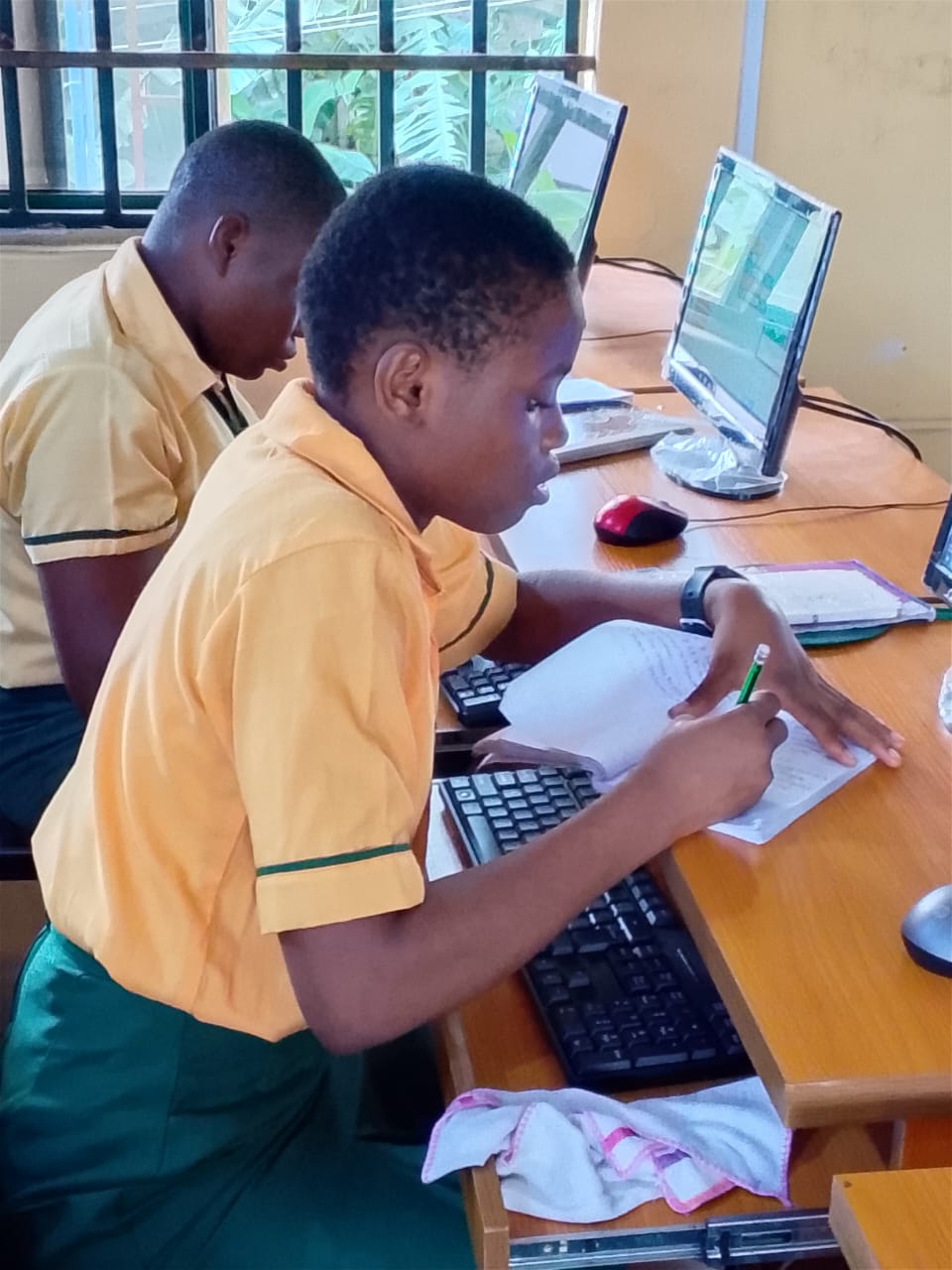
ModeCodersclub is Mode Digital’s digital skills coding programme for primary/secondary school students. Termly. Instructor-led. Delivered in real school classrooms across the Niger Delta. Students learn HTML, CSS, and basic JavaScript, progressing from complete beginners to the builders of working, published websites.
The transformation ModeCodersclub enables operates on two levels.
At the technical level, students gain real, demonstrable digital skills. They leave the programme with a portfolio project — a working URL bearing their name — that they can show at university interviews, scholarship applications, and eventually job interviews. In a competitive graduate labour market, this distinction matters.
At the cognitive level, something more durable happens. Students learn that complex systems are made of understandable parts. That errors are information, not failure. That the act of building something — of making something that did not exist before appear because of decisions and instructions you authored — is available to them. This identity shift, from consumer to creator, is the most consistent outcome we observe in ModeCodersclub students, and it is reported by parents more often than any technical skill.
The Niger Delta’s young people do not lack the capacity for this shift. They have lacked, in many cases, the environment in which the shift was possible. ModeCodersclub creates that environment in their own schools, with instructors who come from and return to their communities, with a curriculum that is built for their infrastructure reality rather than assuming conditions that don’t exist.
This is what education transformation looks like at the grassroots: not a grand programme announced from Lagos, but an instructor in a classroom in Yenagoa asking a fourteen-year-old to build something she has never built before — and watching what happens to her face when it works.
Web Hosting: Transforming Economic Participation
The third tool addresses a gap that is often missed in education-focused conversations: the digital presence gap that makes Nigerian SMEs economically invisible.
Mode Digital’s web hosting service builds professional, mobile-optimised, Google-ready websites for Nigerian small and medium enterprises — at prices calibrated for the Nigerian SME market, with local support from a Nigerian team.
This is education transformation in its applied, economic form.
When a market woman in Warri who has run a successful textile business for twenty years gets a website, something changes. She becomes visible to customers she has never met. She becomes findable by Google search when someone in her city looks for what she sells. She becomes eligible for corporate contracts that require a verified digital presence. Her business — which has always been real, always been excellent — enters an economy from which it was previously structurally excluded.
The transformation is not in the business. The business was already good. The transformation is in the access. In the visibility. In the expansion of what is available to a business that has always deserved more market than word of mouth and WhatsApp could provide.
Part Four: The Philosophy — What Makes Digital Education Transform
Not all digital education transforms. The world is full of EdTech products that have raised investment, generated press releases, and produced minimal improvement in student outcomes. Understanding what makes digital education genuinely transformative — as opposed to merely digital — is important.
From Mode Digital’s experience, genuine educational transformation through digital tools requires five conditions.
Community rootedness. A tool built by people who understand the specific conditions of the community it serves will outperform a generic tool adapted for that community. MODECBT works for Niger Delta students because it was built by people who understand what Niger Delta students face — not as a demographic, but as neighbours. ModeCodersclub works in Niger Delta classrooms because it was designed around the infrastructure and curriculum context of those specific classrooms, not around the infrastructure of a Lagos co-working space.
Accessibility as a design principle, not an afterthought. Transformation cannot be delivered to the people who can already afford it and called inclusive. MODECBT’s free tier, ModeCodersclub’s school-partnership pricing, and web hosting rates built for Nigerian SMEs are not marketing decisions. They are structural commitments to the principle that tools that only reach the already-resourced are not closing gaps — they are reinforcing them.
Intelligence in the feedback loop. The most transformative educational interventions are not those that deliver the most content. They are those that provide the most useful feedback. A student who answers ten questions and receives ten marks learns less than a student who answers ten questions, receives intelligent explanations for every wrong answer, and understands why they went wrong and how to avoid the same error next time. MODECBT’s AI explanation engine is a feedback intelligence investment. It is why the platform produces deeper learning than any volume of unannotated past questions can.
Human accountability structures. Digital tools do not replace human relationships in education. They amplify them. ModeCodersclub’s impact depends on instructors who show up, who engage individual students, who notice when someone is falling behind and adjust. MODECBT’s community presence — the daily social media posts, the personal responses to student DMs, the sense that a real team of people from the Niger Delta is behind the platform — is not incidental to the product’s educational impact. It is part of it. Students who feel seen by the company providing their preparation tool engage more deeply with that tool.
Long-term presence and commitment. Transformation does not happen in a programme cycle. It happens over years of sustained institutional presence — of a company being there when the first cohort of ModeCodersclub students graduates and is still there when they go to university and come back to speak to the next cohort. Mode Digital is building for that duration. The products are investments in a relationship with communities that is measured in decades, not funding rounds.
Part Five: Beyond the Niger Delta — What Nigeria Needs
Mode Digital is a Niger Delta company. It will remain a Niger Delta company. Its primary accountability is to the communities it came from and serves.
But the problems it is solving are not Niger Delta problems. They are Nigerian problems, and in many cases, African problems.
The examination preparation gap — 76–78 percent of JAMB candidates failing to meet university entrance thresholds — is a national crisis. It calls for national-scale solutions. MODECBT, built for the Niger Delta, is scalable to every state in Nigeria. The same AI explanation engine that helps a student in Bayelsa understand why her Chemistry answer was wrong will help a student in Sokoto or Anambra or Cross River understand the same thing.
The digital skills gap — the systematic underrepresentation of Nigerian youth in the digital economy because they were never given foundational digital education — is a national crisis. ModeCodersclub, developed in Niger Delta primary/secondary schools, carries a curriculum and delivery model that is replicable across Nigeria’s 36 states.
The digital business gap — the 70% of Nigerian SMEs that remain invisible to online customers — is a national crisis. Mode Digital’s web hosting and digital presence service, built for Niger Delta businesses, is deployable anywhere in Nigeria.
What the Niger Delta’s experience teaches Nigeria is that the gap between talent and access is not inevitable. It is structural. Structures can be changed. And the organisations most likely to change them are not the ones parachuting in from outside — they are the ones built from within, by people who understand the specific texture of the challenge and have decided to stay and solve it.
Mode Digital is that organisation, for the Niger Delta.
Nigeria needs more of them, for every region the development reports don’t write about.
Part Six: The Invitation
This article is not a conclusion. It is an invitation.
To Nigerian parents: your child’s education does not end at school completion. The gap between what school teaches and what the digital economy rewards is real, documented, and closeable. MODECBT and ModeCodersclub are two tools for closing it. The investment you make in intelligent, format-accurate exam preparation and foundational digital skills today will compound in ways that are genuinely difficult to overstate.
To Nigerian educators: the curriculum is necessary. It is not sufficient. The teachers, school administrators, and lesson professionals who add digital preparation tools to their students’ preparation are not undermining traditional education. They are completing it. We would like to partner with you.
To Nigerian NGOs, foundations, and corporate partners: the students you support through secondary school are arriving at the JAMB gate without the preparation tools that would allow them to pass through it. MODECBT can fill that gap. The conversation is simple and the partnership models are flexible. Reach out.
To Nigerian government and policy institutions — particularly the NDDC: the mandate to develop human capital in the Niger Delta is both constitutional and urgent. A partnership between the NDDC and Mode Digital Creations to sponsor MODECBT access and ModeCodersclub school programmes would put intelligent digital education tools in the hands of thousands of Niger Delta students at a cost that is a fraction of the infrastructure investments the commission routinely makes. The conversation is overdue.
To the students: you are not waiting to be saved. You are waiting to be equipped. MODECBT is at modecbt.com. ModeCodersclub is at your school, or it will be. Come and build something.
Closing: The Wheel Keeps Turning
The title of this article describes Mode Digital as being at the driving wheel of digital education transformation in the Niger Delta.
I want to be honest about what that means — and what it doesn’t mean.
Mode Digital did not start the transformation. The Niger Delta’s communities have been educating their children, demanding better from their institutions, and investing in the future of their young people for generations before Mode Digital existed. The teachers who show up to under-resourced schools every day, the parents who sacrifice to pay school fees on unstable incomes, the students who wake up and study when the power is out and the alternative is despair — they are the transformation. They have always been the transformation.
What Mode Digital brings to the wheel is technology. Intelligence. Product. Scale. The ability to reach a student in Yenagoa at 11pm with an AI explanation for a Chemistry question they got wrong, without a teacher being present, without a textbook being open, without anything more than a phone and a data connection.
That is not everything. But in a region where access has always been the constraint — where the limiting factor has never been desire or talent but infrastructure and tools — it is not nothing.
It is, we believe, the right thing to build.
And we are building it.
For the Niger Delta. For Nigeria. For every student who deserved better preparation than the system gave them and is ready, right now, to make up the difference.
The wheel keeps turning.
Davids Ogan is the founder and MD/CEO of Mode Digital Creations Limited, a digital technology company headquartered in the Niger Delta. Mode Digital built MODECBT (modecbt.com), Nigeria’s AI-powered JAMB CBT preparation platform; offers professional web hosting services for Nigerian businesses; and runs ModeCodersclub, a structured digital skills coding programme for secondary school students.
To explore partnerships, sponsorships, school programmes, or investment in Mode Digital’s work, reach us at: modecbt.com @modecbt X, LinkedIn, Instagram, and TikTok Email: info@modedigitalcreations.ng. Tel. +2348065180018
#DigitalEducation #EdTech #NigerDelta #Nigeria #Transformation #MODECBT #Codersclub #ModeDigital #EducationForAll #DigitalInclusion #NigerianYouth #AfricaTech #JAMBPrep #DigitalSkills #BuildingInPublic
Discover more from Daily Media NG
Subscribe to get the latest posts sent to your email.