
Education
JAMB Acknowledges God: Blames UTME 2025 Mass Failure on Technical Glitches

Post Links
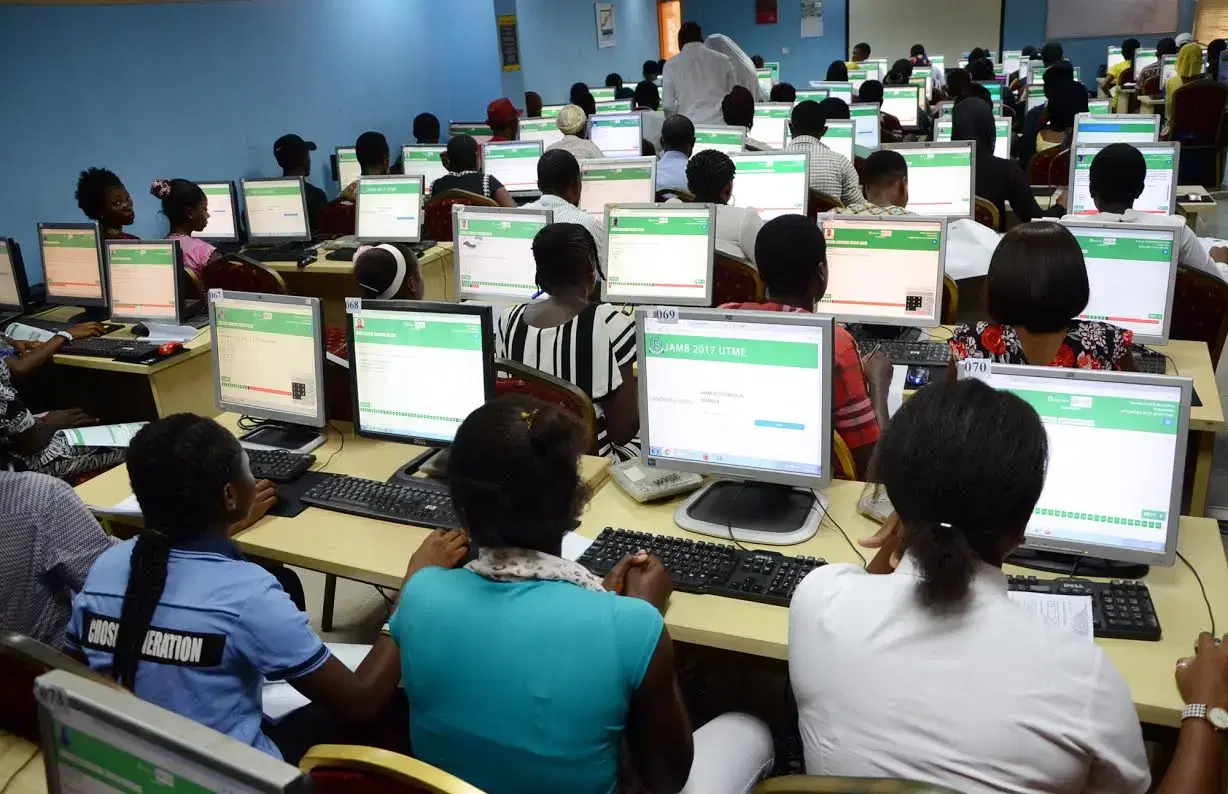
The 2025 Unified Tertiary Matriculation Examination (UTME) conducted by the Joint Admissions and Matriculation Board (JAMB) in Nigeria has been marred by unprecedented controversy, with widespread reports of mass failure and technical glitches prompting a swift response from the examination body. Over 1.5 million of the 1.95 million candidates scored below 200 out of a possible 400 marks, sparking outrage among students, parents, and educators.
Following intense public scrutiny, JAMB admitted to significant technical errors affecting 157 examination centres and issued a heartfelt apology. The board has since outlined plans for nearly 380,000 affected candidates to retake the exams, aiming to restore trust in its processes. Let us delve into the technical panel review, the root causes of the failure, JAMB’s response, and the steps forward.
UK Tiktok Creation Blueprint with Monetization tips and Coaching – How to create a U.K. tiktok account

The 2025 UTME Crisis: A Shocking Wave of Mass Failure
The release of the 2025 UTME results on May 9, 2025, sent shockwaves across Nigeria. According to JAMB’s official statistics, a staggering 78.5% of candidates—approximately 1.5 million out of 1.95 million—scored below 200, the unofficial benchmark for competitive university admissions. Only 12,414 candidates (0.63%) achieved scores above 300, while 983,187 (50.29%) fell within the 160–199 range. These figures marked a significant departure from expectations, especially for candidates with proven academic excellence who reported drastic drops in performance compared to previous years.
Social media platforms, particularly X, erupted with outrage under the hashtag #ThisIsNotMyResult, as candidates shared stories of technical glitches during the exam, including frozen screens, incomplete questions, and mismatched question sets. For instance, one candidate, @Pennyfabz, posted, “Dear @JAMBHQ, Something is wrong with my result. I’m very confident that this is not what I’m meant to get. I can’t go from 285 to 156.” Another user, @quwam001, echoed similar sentiments, highlighting systemic issues that appeared to disproportionately affect certain examination centres. The scale of the mass failure and the volume of complaints—over 11,467 formal submissions by May 12—prompted JAMB to initiate an urgent technical panel review.
Technical Panel Review: Uncovering the Root Cause
In response to the public outcry, JAMB fast-tracked its annual system review, a comprehensive post-mortem of the examination process typically conducted months after the UTME. The review focused on three key stages: registration, examination, and result release. To ensure transparency, JAMB engaged independent experts, including members of the Computer Professionals Association of Nigeria, psychometricians, university vice-chancellors, and representatives from the Educational Assessment and Research Network in Africa.

The investigation revealed that technical glitches affected 157 out of 887 examination centres, primarily in the Lagos and Owerri zones, impacting 379,997 candidates. JAMB Registrar, Professor Ishaq Oloyede, explained that the errors stemmed from a failure to properly update delivery servers, particularly during the first three days of the examination (April 24–26, 2025). A technical service provider inadvertently failed to upload candidates’ responses, leading to discrepancies in the grading process. Oloyede noted, “The errors, which went undetected before the results were released, stemmed from a technical glitch caused by one of JAMB’s two service providers.” This admission marked a critical turning point in addressing the mass failure.
JAMB’s Admission of Error and Heartfelt Apology
On May 14, 2025, during a press conference in Abuja, Professor Oloyede took full responsibility for the technical glitches, delivering an emotional apology that resonated with many Nigerians. “As registrar of JAMB, I hold myself personally responsible, including for the negligence of the service provider, and I unreservedly apologise,” he said, visibly moved.
He described the incident as a “moment of joy turned sour” and emphasized JAMB’s commitment to transparency, fairness, and equity. In a statement posted on X, JAMB further clarified, “Man Proposes, God Disposes! It has been established that a technical glitch affected 157 centres in the 2025 UTME. This was basically responsible for the general low performance of the candidates scheduled to sit the examination in those centres.”
The apology was met with mixed reactions. While some candidates and parents appreciated JAMB’s candour, others expressed frustration over the disruption and the initial lack of communication. Education advocate Alex Onyia, who mobilized over 8,000 candidates for a potential class-action lawsuit, argued that the apology alone was insufficient without systemic reforms to prevent future failures. Nevertheless, JAMB’s willingness to admit fault and take corrective action set a precedent for accountability in Nigeria’s education sector.
Exam Retake: A Second Chance for Affected Candidates
To address the impact of the technical glitches, JAMB announced that 379,997 affected candidates would retake the UTME starting May 16, 2025. The board has coordinated with the West African Examinations Council (WAEC) to ensure the rescheduled exams do not clash with the ongoing West African Senior School Certificate Examination (WASSCE). Affected candidates are being notified via SMS, email, and phone calls, with instructions to reprint their examination slips for updated details.
JAMB has assured candidates that the rescheduled exams will be conducted under stricter oversight to prevent a recurrence of technical issues. The board has also promised to mark the retake exams fairly, with shuffled answer options to enhance test integrity. For candidates with conflicting schedules, JAMB has pledged to provide alternative dates, ensuring no one is disadvantaged. This proactive approach aims to restore confidence in the UTME process and provide a fair opportunity for affected students to demonstrate their abilities.
Broader Implications: Systemic Issues in Nigeria’s Education System
While JAMB’s response addresses the immediate crisis, the 2025 UTME mass failure has reignited debates about deeper systemic issues in Nigeria’s education system. Critics argue that technical glitches are only part of the problem, pointing to curriculum misalignment, inadequate teacher training, and poor learning environments as contributing factors. The intense competition for limited university slots—approximately 600,000 for nearly 2 million candidates—adds immense pressure, often leading to emotional and academic burnout.
Historical data show that mass failures are not unprecedented in the UTME. In 1984, only 15% of candidates scored above the equivalent of 200, and in 2004, 70% scored below this threshold. However, the scale of the 2025 failure, coupled with verifiable technical issues, underscores the need for comprehensive reforms. Stakeholders have called for increased education funding, stricter oversight of technical service providers, and the introduction of counselling support for candidates. An independent audit of JAMB’s Computer-Based Testing (CBT) systems has also been proposed to validate scoring algorithms and ensure procedural fairness.
JAMB’s Commitment to Reform and Future Prevention
JAMB has outlined several measures to prevent future occurrences of technical glitches. These include enhanced pre-examination testing of servers, stricter vetting of service providers, and the adoption of more robust software solutions. The introduction of JAMB TEST, an internally developed software that replaced the previous Autobot and Autotest systems, was cited as a step toward aligning the UTME with global standards. However, the 2025 crisis highlighted the need for rigorous stress-testing and contingency planning.
Professor Oloyede emphasized that JAMB’s anti-malpractice measures, such as withholding 39,834 results for suspected infractions, remain a cornerstone of its operations. The board’s collaboration with external experts during the technical panel review also signals a commitment to transparency and accountability. Moving forward, JAMB plans to engage stakeholders, including candidates and parents, to rebuild trust and ensure the UTME remains a credible pathway to tertiary education.
Conclusion: A Path to Redemption for JAMB and Candidates
The 2025 UTME crisis, characterized by mass failure and technical glitches, has tested JAMB’s resilience and credibility. The board’s swift technical panel review, admission of error, and heartfelt apology demonstrate a commitment to accountability. By scheduling an exam retake for 379,997 affected candidates, JAMB is taking concrete steps to rectify the situation and provide a second chance for students. However, the incident underscores the need for systemic reforms to address both technical and educational challenges in Nigeria’s examination system.
For candidates preparing for the retake, staying informed through JAMB’s official channels and focusing on preparation will be crucial. For JAMB, the path to redemption lies in delivering a flawless resit and implementing long-term reforms to prevent future crises. As Nigeria’s education system navigates these challenges, the 2025 UTME serves as a reminder of the importance of fairness, transparency, and resilience in shaping the future of millions of young Nigerians.
Discover more from Daily Media NG
Subscribe to get the latest posts sent to your email.





Career
From Oil Fields to Mind Fields: How Digital Skills Initiatives Can Power Nigeria’s Next Economy
Discover more from Daily Media NG
Subscribe to get the latest posts sent to your email.
Discover more from Daily Media NG
Subscribe to get the latest posts sent to your email.
Discover more from Daily Media NG
Subscribe to get the latest posts sent to your email.


Business4 months ago
Social Media + Website: How Nigerian Small Businesses Use Both Together to Win More Customers

Education4 months ago
Introducing Modebills: The Ultimate All-in-One School Management Ecosystem

Education4 months ago
Igniting Futures: The ModeCodersClub Story

Business4 months ago
How a Website Helped My Niger Delta Business Attract Corporate Clients in Nigeria

Business5 months ago
Why Nigerian Businesses Are Losing Customers Without a Website — And How to Fix It

Education5 months ago
The Transforming Power of Education: Digital Education Transformation in the Niger Delta and Beyond

Career4 weeks ago
From Oil Fields to Mind Fields: How Digital Skills Initiatives Can Power Nigeria’s Next Economy
Business2 months ago
Digital Skills and Entrepreneurship: The Twin Engines Africa Needs

Business3 months ago
Akara Won’t Build Nigeria’s Future

Entertainment7 years ago
GOTV Customer Care Line, Emails, Whatsapp, Phone numbers, Website

Business6 years ago
How to Start Charcoal Export business in Nigeria

Entertainment7 years ago